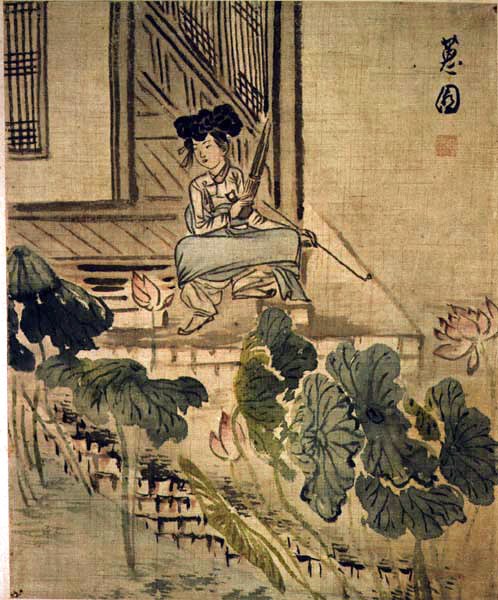
Overview
A hanbok is an ensemble rather than a single garment: a wrap jacket tied with a long ribbon, worn with a high, full skirt or with trousers, and often an overcoat on top. It favours flat planes of plain colour, gentle curves, and a silhouette that hides the body’s line.
How it is worn
The jacket is closed left over right and tied with the otgoreum ribbon, the woman’s skirt bound high under the arms so it falls in a bell, the man’s trousers gathered at the waist and ankle. Colour and trim signalled age, season, and occasion rather than the cut, which changed slowly.
History
Korean dress of jacket-and-skirt or jacket-and-trousers is very old, seen already in Goguryeo tomb murals, but the hanbok’s familiar high-waisted, short-jacketed form settled in the later Joseon dynasty. Displaced by Western clothes in the twentieth century, it is now worn for holidays and ceremonies and freshly reinterpreted by designers.