Overview
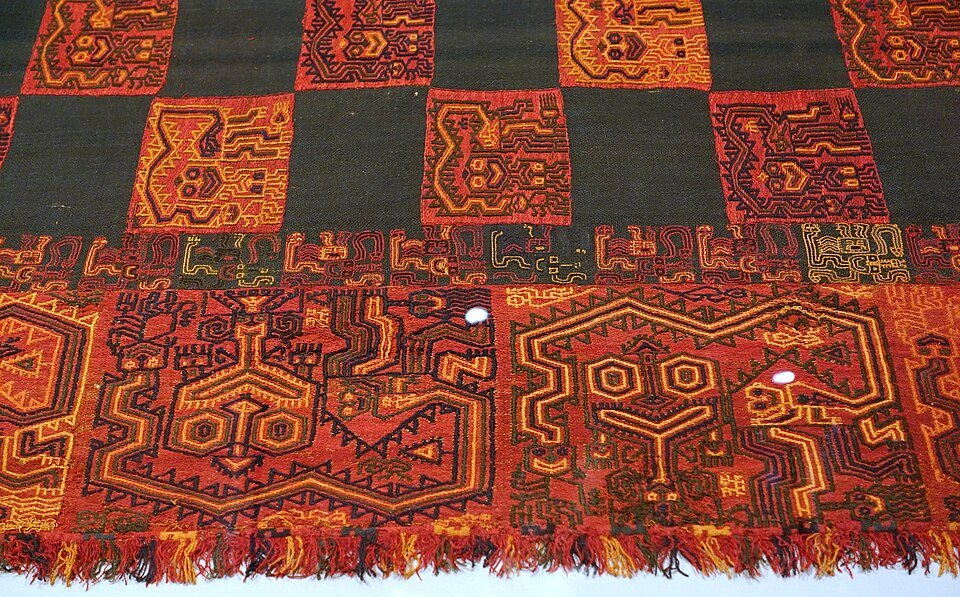
A Paracas mantle is a large rectangle of cotton or camelid cloth covered in fine wool embroidery, showing rows of flying shamans, birds, and composite beings in strong reds, golds, and greens. Whole garments — mantles, tunics, loincloths, and turbans — were made not only to wear but to wrap the mummified dead.
How it is worn
In life such cloth was draped and pinned about the body as mantle, tunic, and headcloth; in death the honoured were bound in layer upon layer of these embroidered textiles, the finest garments a family could provide. The number and quality of the cloths measured the standing of the dead.
History
The Paracas culture flourished on Peru’s southern coast from about 800 BC to AD 100, and its Necropolis burials preserved the textiles almost perfectly in the desert. They set the pattern for the Andean world’s long tradition of cloth as the highest form of wealth and art.