Overview
In the Andes cloth was the highest art and the principal form of wealth, and the Early Horizon is where that becomes unmistakable. The Paracas burials on the desert coast preserved embroidered mantles of a size and finish that no contemporary elsewhere in the Americas approaches — and preserved them because they were made for the dead.
Key garments and style
The wardrobe is rectangular and uncut: the unku tunic, the mantle, the loincloth, the headcloth, woven to shape on the loom. Materials came from two ecologies — cotton from the coast, alpaca and vicuña wool from the highlands — so a single fine garment implies exchange across the Andes.
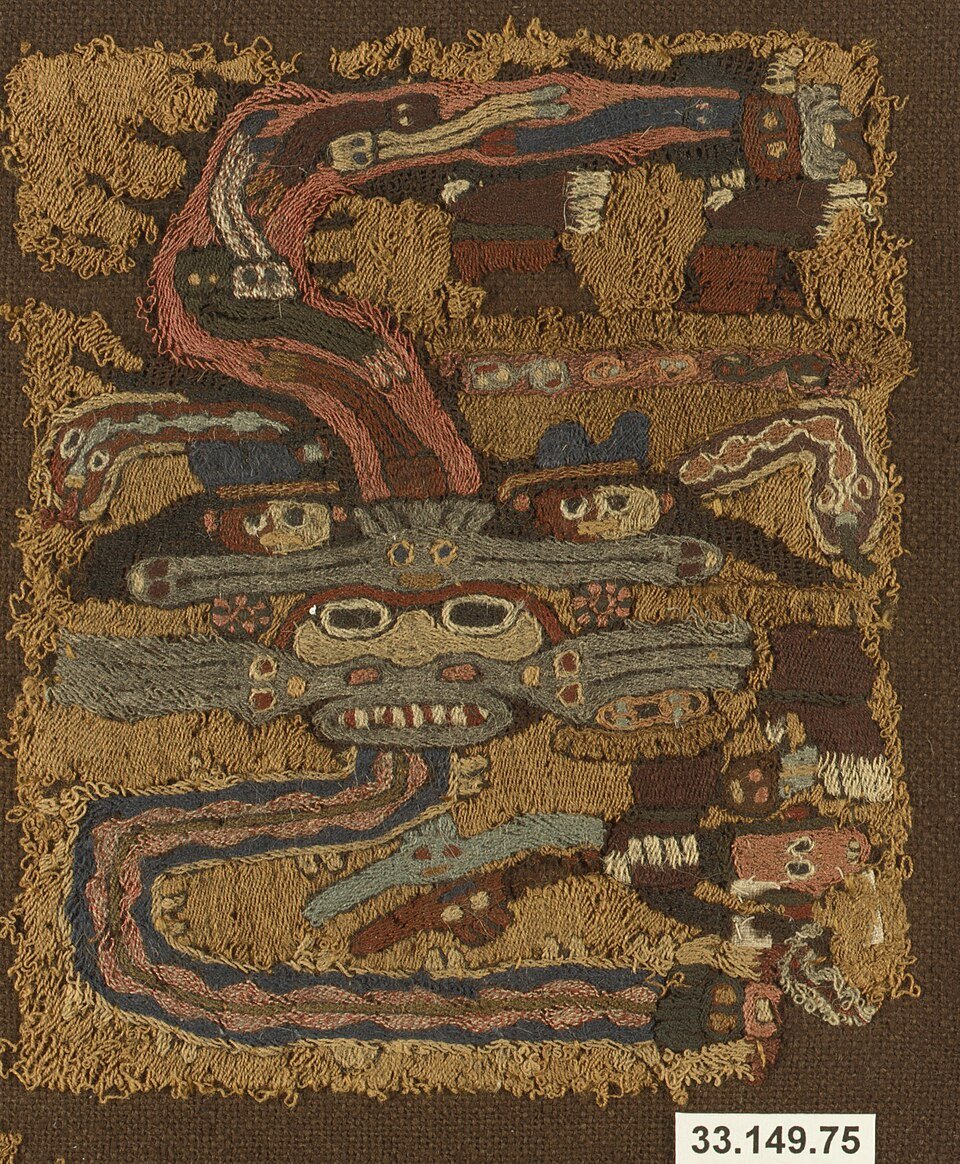
The Paracas mantles are worked in stem-stitch embroidery in many colours, covered with repeated figures of masked beings, birds and felines, each repeat varied in colouring. The bundles they came from were wrapped in layers of cloth around the seated body, so quantity was itself the offering; some contain dozens of textiles.
Chavín, earlier and inland, supplied the iconography that spreads through this world, its fanged deities appearing on painted cotton as well as in stone.
Technique was correspondingly wide: double cloth, gauze, tapestry, three-dimensional cross-knit looping along mantle edges, and a colourfast palette from plant and insect dyes.
Transition
The regional states that follow — Moche, Nazca, Wari and Tiwanaku — take these techniques further, and the tapestry tunic becomes the Andean state garment.