Overview
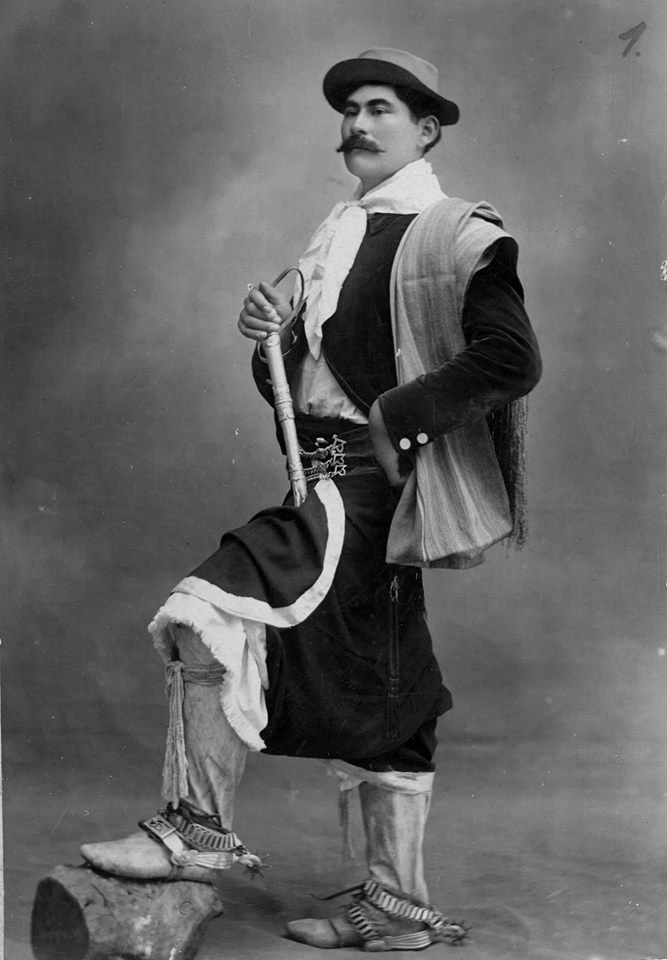
A chiripá is a length of woollen or cotton cloth wound around the hips and drawn up between the legs to form a loose, diaper-like breech, worn over a fringed underdrawer (the cribo) and held by a wide belt heavy with silver coins. Free at the leg, it suited long days in the saddle.
How it is worn
It is wrapped about the waist over the drawers and the front corner drawn up and tucked into the belt, worn with a shirt, a poncho, soft boots, and the coin-studded tirador belt. Plain homespun for work, finer cloth and silver for display, it marked the gaucho as clearly as his horse and knife.
History
The chiripá was the characteristic lower dress of the gaucho and his Rioplatense cousins through the eighteenth and nineteenth centuries, worn in the wars of independence and the cattle country of Argentina, Uruguay, and southern Brazil. It gave way to the bombachas by the late nineteenth century but survives in traditional and festival dress.