What it was
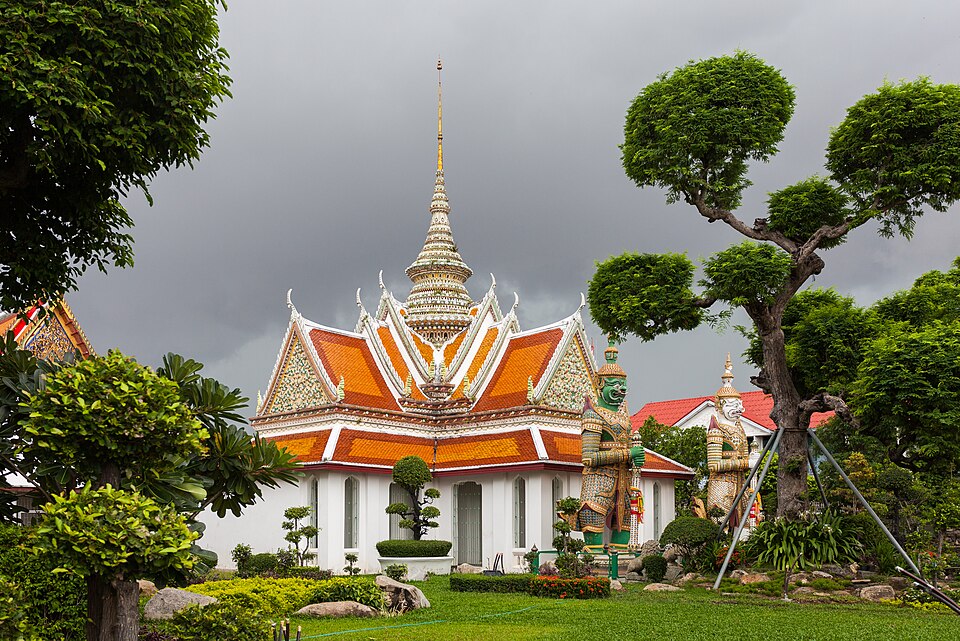
Wat Arun is the Temple of Dawn on the Thonburi (west) bank of the Chao Phraya, one of Thailand’s most recognizable landmarks. By tradition and records, an older Ayutthaya-period temple known as Wat Makok stood on the site by the 17th century.
Role
When Taksin made Thonburi his capital in 1767, the temple stood beside his palace, and he renamed it Wat Chaeng, the temple of dawn — tradition links the name to his arrival there at dawn. The temple housed the Emerald Buddha from its arrival from Vientiane until the image was transferred in 1784. Under Rama II it was renamed Wat Arun, after Aruna, the Indian god of dawn, and its expansion began. The iconic central prang, decorated with pieces of Chinese porcelain and seashells, was completed in the reign of Rama III in the mid-19th century, its height reported variously from about 67 to 86 meters.
Fate
Wat Arun remains an active royal temple. Its riverside silhouette at sunset is among the most photographed views in Bangkok, and the temple appears on the 10-baht coin.