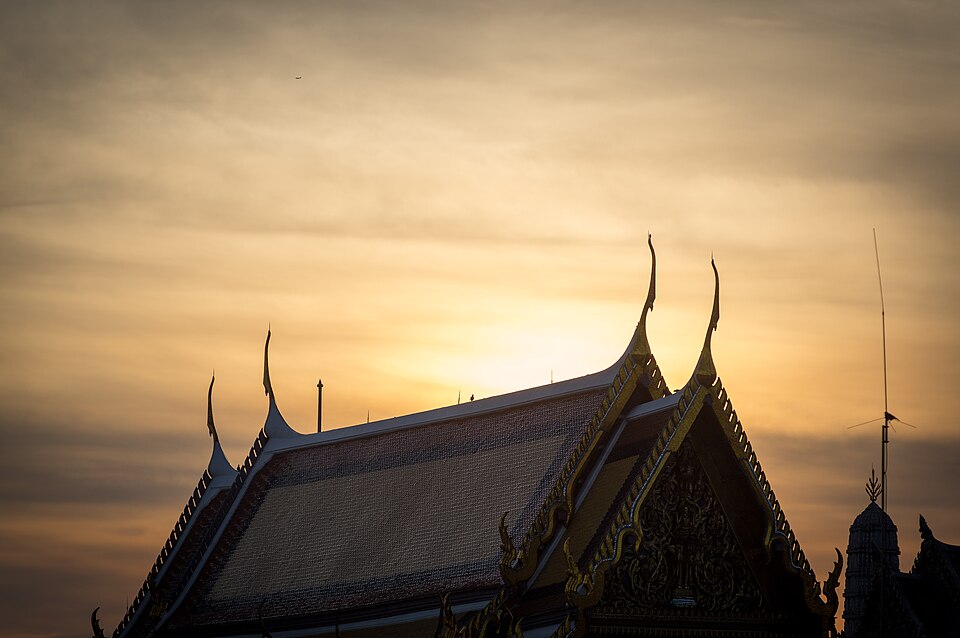
Overview
In 1782 Rama I founded a new capital at Bangkok, opening the era named for Rattanakosin Island. The name Rattanakosin also denotes the kingdom beyond 1932; this page covers 1782–1932, with the constitutional era treated as its own period.
Key developments
Rama I rebuilt state, law and court culture on the Ayutthayan model — the Grand Palace and Wat Phra Kaew, the Three Seals Law Code (1805) and a complete Ramakien — and his reign repelled the great Burmese invasion known as the Nine Armies War (1785–86, under Bodawpaya).
From the mid-19th century, Western pressure mounted. Mongkut (r. 1851–1868) chose engagement: the Bowring Treaty (1855) opened trade with Britain and became the model for treaties with other powers. Chulalongkorn (r. 1868–1910) transformed the state — the gradual abolition of slavery and corvée (completed 1905), centralized monthon administration, modern ministries (1892), schools, railways and telegraphs. Territories were ceded to French Indochina (1893, 1904, 1907 — Lao and western Cambodian lands) and to Britain (1909 — four Malay states), preserving the core’s independence: Siam remained the only Southeast Asian state never colonized.
End and transition
The fiscal strain of the Great Depression and a foreign-educated new elite culminated in the bloodless revolution of June 24, 1932, which ended absolute monarchy under Prajadhipok (Rama VII) and opened the constitutional era.