What happened
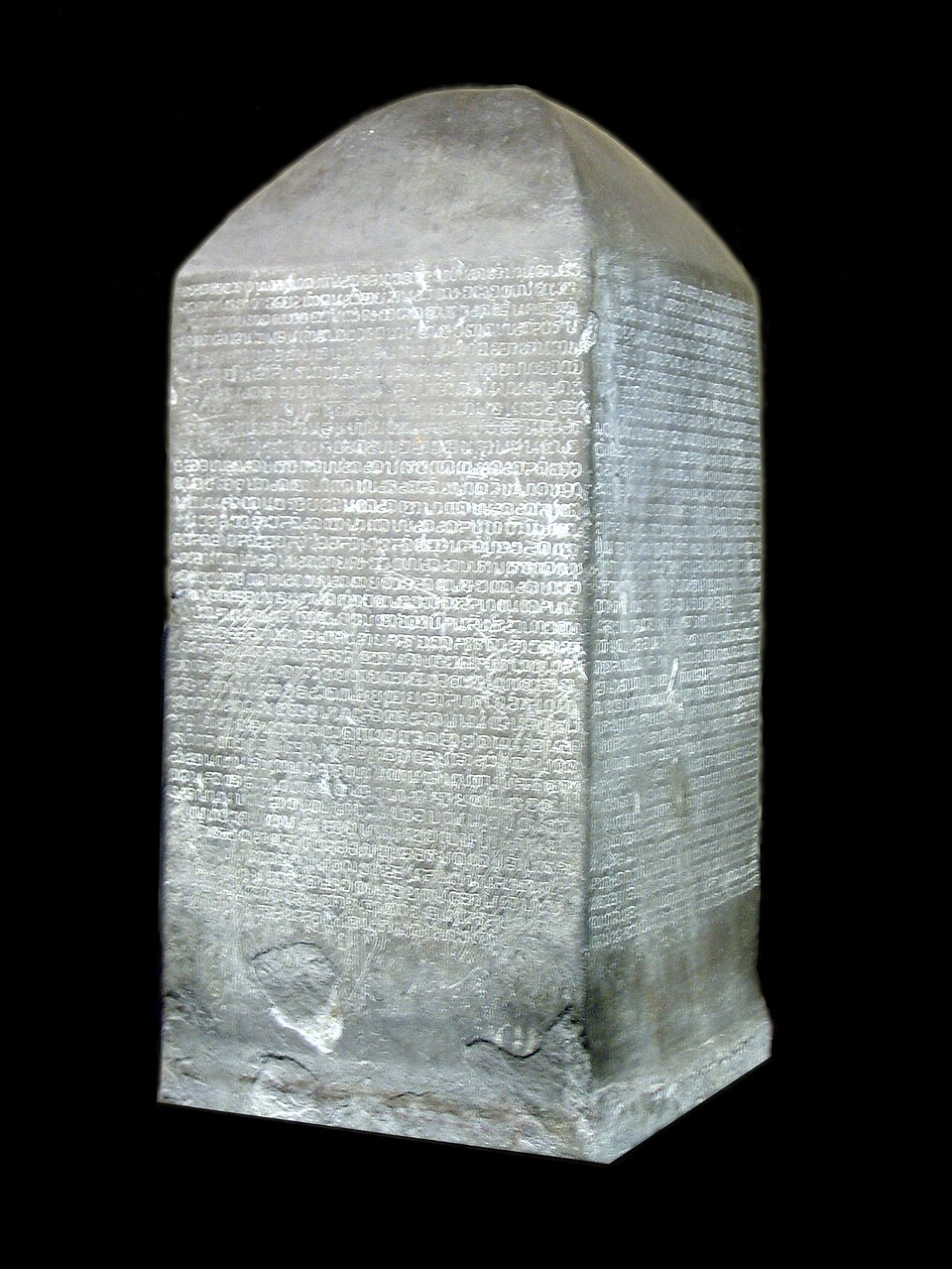
The stele, known as Inscription One, is a four-sided stone pillar bearing a date equivalent to 1292 and written in an early form of the Thai script. It describes King Ram Khamhaeng’s Sukhothai as prosperous and benevolently ruled — in a famous line, paraphrased: in the water there are fish, in the fields there is rice. It also says a bell hung at the gate for any subject to ring and seek the king’s justice, and it credits the king with devising the Thai script, a feat tradition dates to 1283.
Background
The stele was found in 1833 at Sukhothai by Prince Mongkut — the future King Rama IV — during his years as a monk.
Consequences
The inscription became the founding document of the Thai national narrative and the earliest claimed evidence of the Thai script; it was inscribed in UNESCO’s Memory of the World register in 2003. Since the late 1980s, some scholars have argued that parts or all of it could be a 19th-century composition, while mainstream Thai scholarship upholds its authenticity. The debate remains unresolved.