What it was
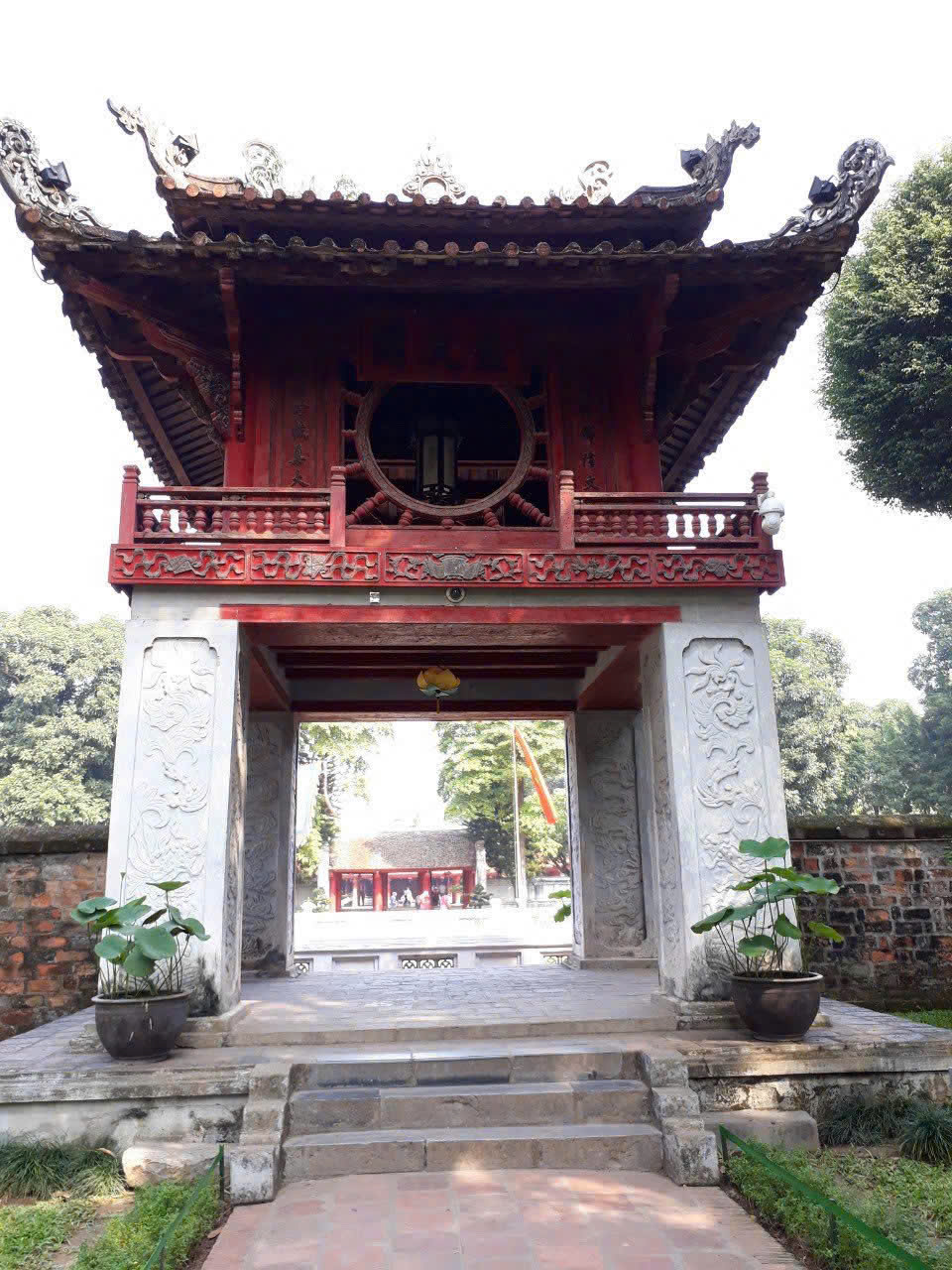
Five walled courtyards run from the gate to the sanctuary, and the third holds what makes the site a document rather than a monument: eighty-two stone stelae carried on the backs of tortoises, engraved with the names and birthplaces of roughly thirteen hundred men who passed the doctoral examinations held between 1442 and 1779. UNESCO entered them in its Memory of the World register in 2010. The academy behind them taught the royal princes first, then the sons of officials, and in time commoners who had come through the provincial examinations. The Khue Van Cac pavilion of 1805, in the second courtyard, is a symbol of Hanoi.
Role
For centuries the temple was the ritual and educational heart of Confucian Vietnam, training mandarins for the examinations. The names of doctoral laureates were carved on stone stelae mounted on stone turtles; 82 stelae from 1484 to 1780 survive and are inscribed in UNESCO’s Memory of the World register.
Fate
The examinations ended under colonial rule. Today the temple is among Hanoi’s most visited monuments, where students still come to honor scholarship before their own exams.