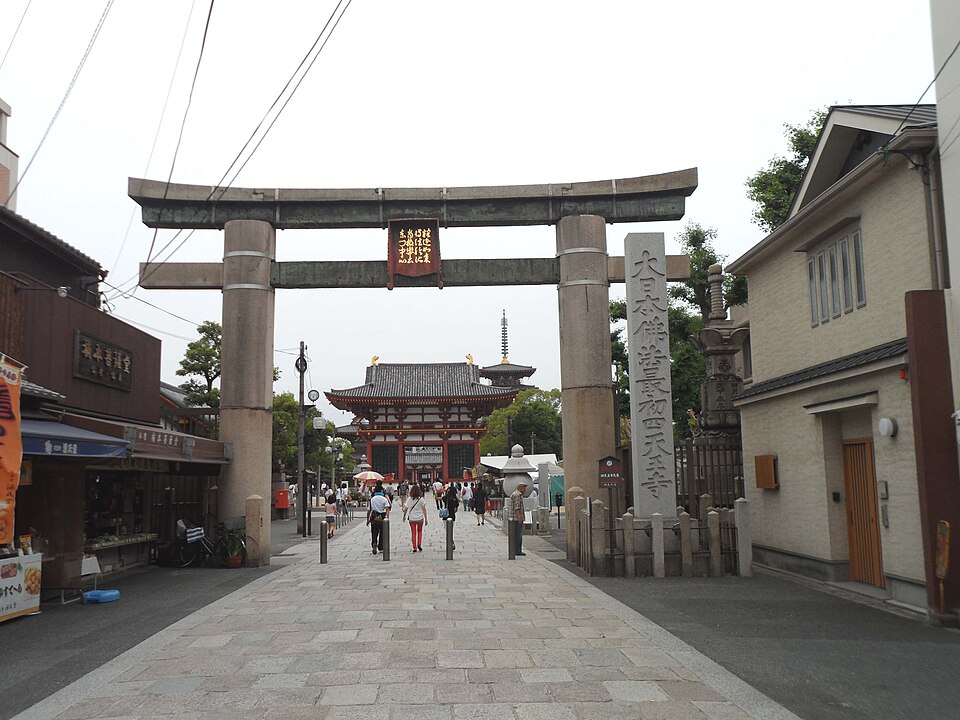
Overview
Prince Shōtoku founded it after a victory he attributed to the four heavenly kings, and the temple has been rebuilt at least seven times, most recently in 1963 in concrete after the 1945 bombing. That sounds like a loss and is not quite: the plan, proportions and sequence are preserved exactly, so it remains the clearest illustration of what a sixth-century temple was. The garden behind the main hall is a rare survivor, laid out in the Edo period.
Highlights
Walk the central axis in order — gate, pagoda, main hall — which is how the plan is meant to be read and is unusual in Japan, where later temples spread sideways. On the twenty-first and twenty-second of each month a large flea market fills the precinct. The treasure house is small and holds items connected to Shōtoku, who is the reason the temple exists.