Overview
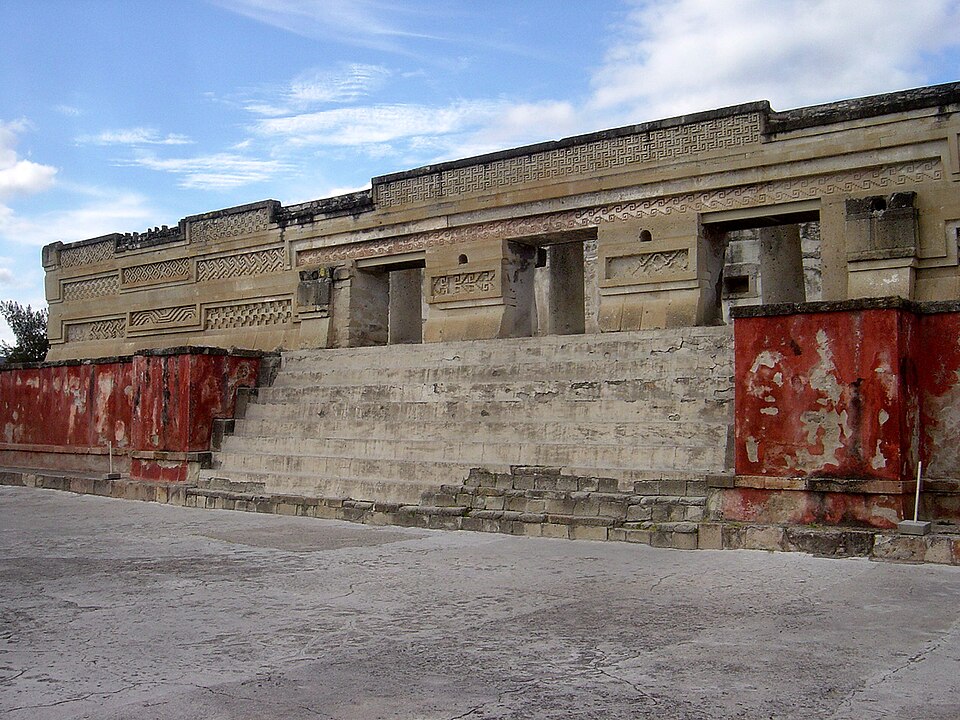
The name comes from the Nahuatl for place of the dead, and the site was a religious centre rather than a city, still in use when the Spanish arrived. A colonial church was built directly on one of its five groups using its stones, which is the sharpest illustration in Mexico of one religion sitting on another. The geometric patterns are believed to be abstractions of the sky serpent and stepped-fret motifs found on textiles and pottery of the same culture.
Highlights
Look closely at the mosaic panels: no two of the fourteen patterns repeat within a single wall. The tomb chambers under the Column Group can be entered, one of them with a monolithic column you are meant to embrace. Mitla is forty-five minutes from Oaxaca and pairs naturally with Hierve el Agua in the same trip.