| Material | In daily use | Best for | Downside |
|---|---|---|---|
| Stainless steel | Boils and simmers everything, acid-safe, lasts decades | The main saucepan — soups, tomato sauce, blanching | Milk and roux can catch if left unwatched |
| Nonstick | Milk, porridge, and cream sauces slide out; cleanup is a rinse | Daily milk, oatmeal, or baby food | Coating lasts 1–2 years; medium heat only, no metal tools |
| Bare aluminum (yukihira) | Heats fastest, weighs least, pours from both sides | Dashi and Japanese home cooking | No lid, and bare aluminum dislikes acidic sauces |
| Enameled steel | Non-reactive like stainless, lighter and cheaper | Acid-safe simmering on a budget | Enamel chips if banged |
Stainless, Nonstick, or Aluminum: Which Saucepan Material?
Published: ·Updated:
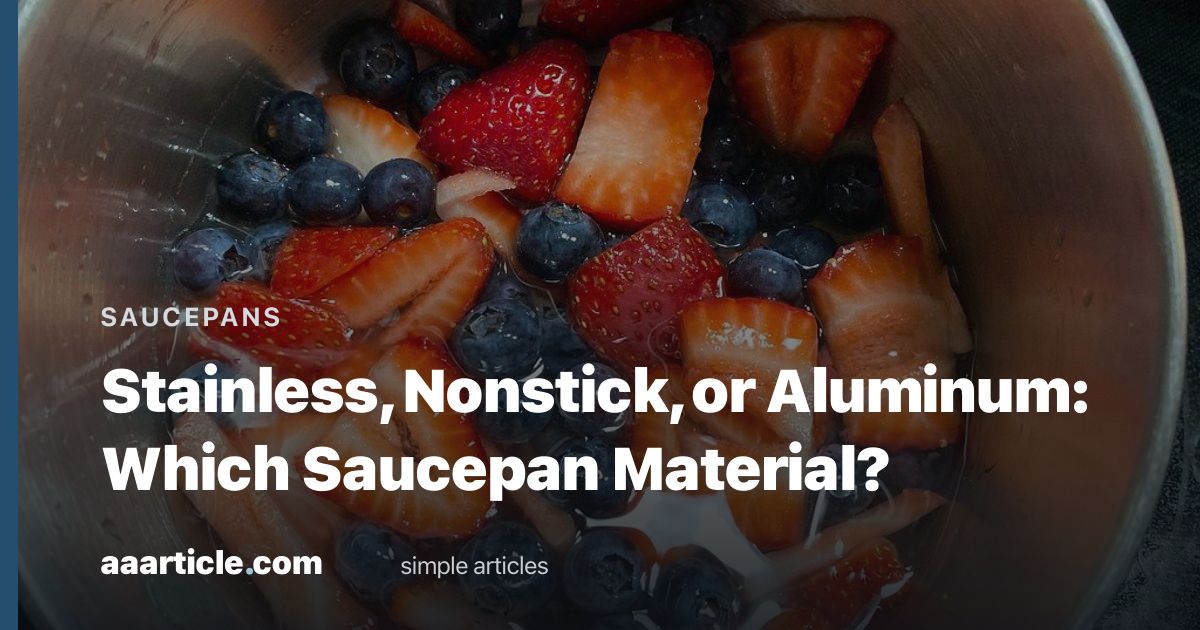
Photo: joncutrer CC0 1.0 Source
Stainless steel — a saucepan's daily jobs are boiling and simmering, where sticking barely matters, and stainless shrugs off acidic sauces and lasts decades. Nonstick and aluminum are second saucepans for specific routines, not the first buy.