Overview
Aboriginal and Torres Strait Islander peoples have lived on this continent for more than sixty-five thousand years across every climate it has, so there is no single Indigenous Australian dress. What there is instead is a consistent principle: in most of the country the body itself, painted and marked, carried more meaning than anything worn over it.
Key garments and style
In warm regions clothing was minimal and adornment was extensive — ochre applied in designs that identified country, kin and ceremonial role, scarification, and headdresses, pendants and belts of shell, feather, seed, bone and human hair string. Pearl shell from the north-west travelled thousands of kilometres through exchange networks, which is direct evidence of how far these goods moved.
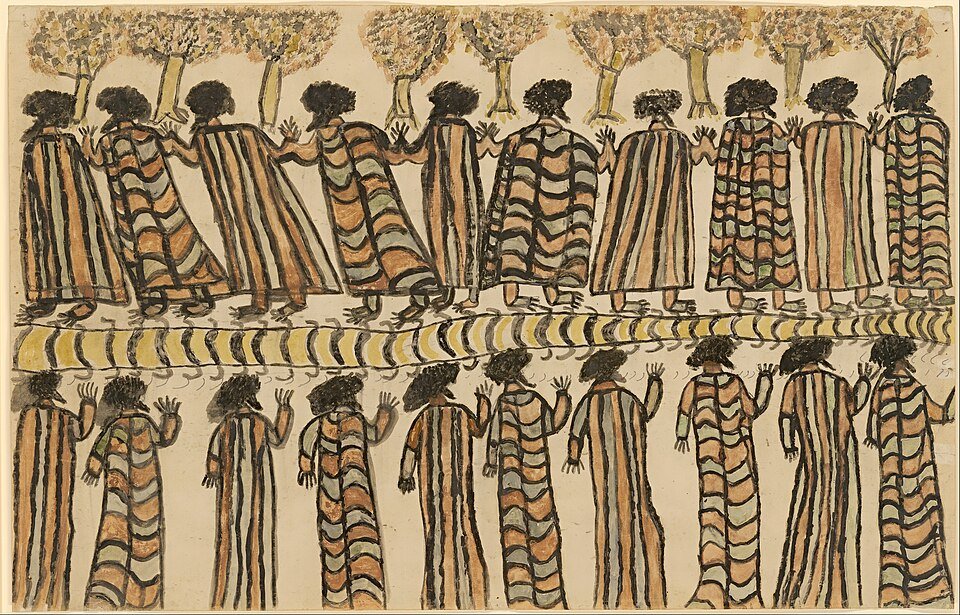
In the cold south-east the possum-skin cloak was the substantial garment: dozens of pelts sewn with sinew, the hide side incised with designs particular to the wearer and their country, worn fur-inward, given at birth and added to through life, and buried with the owner.
Both were disrupted after 1788, and possum-skin cloaks nearly disappeared, with only a handful of nineteenth-century examples surviving in museums.
Transition
Since the 1990s cloak-making has been revived deliberately, taught between communities and worn at ceremonies and welcomes, and Aboriginal-owned textile and fashion labels now design and print at scale.