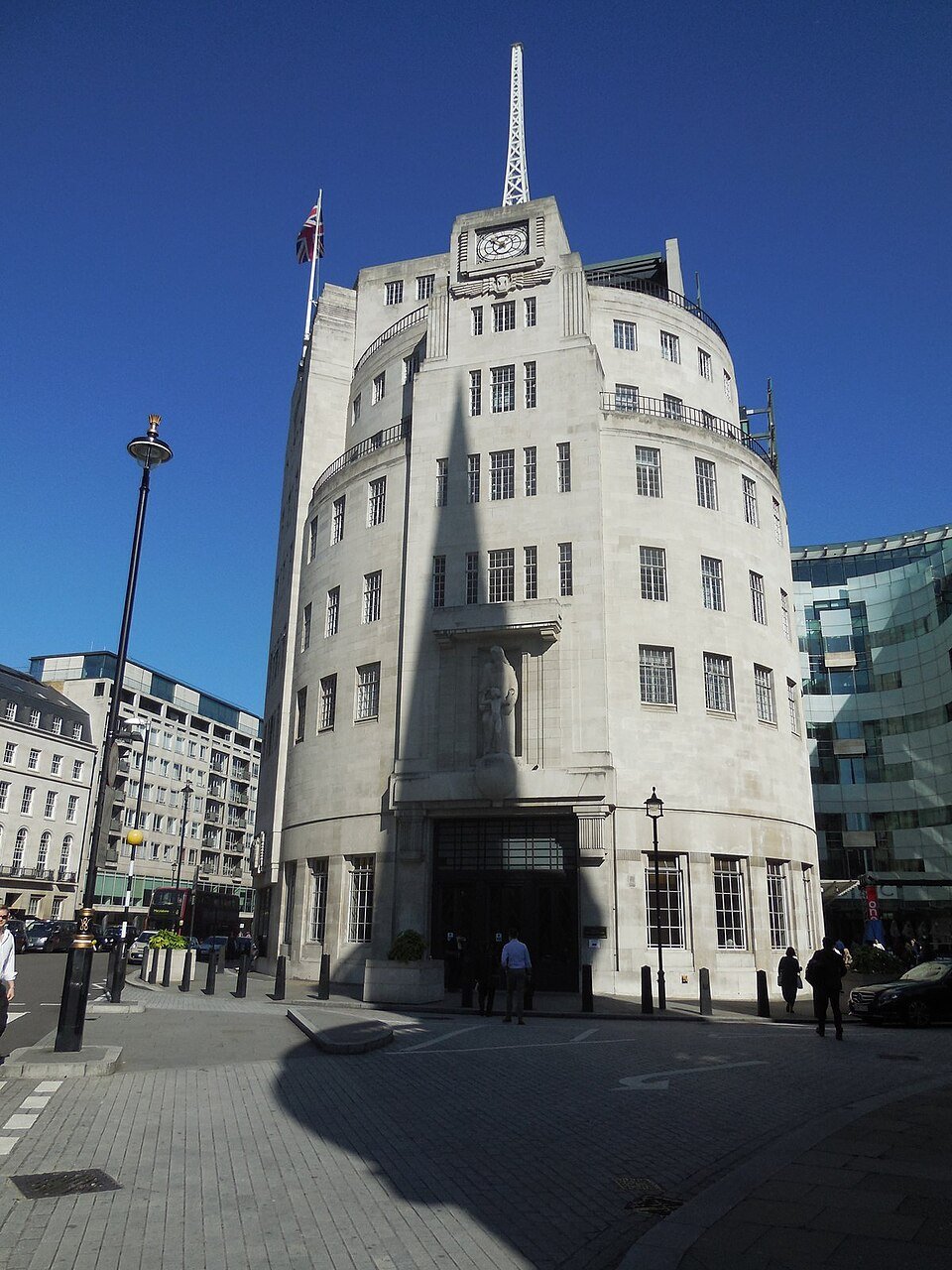
What it was
The British Broadcasting Company began radio transmissions from London in November 1922, and in 1927 was reconstituted by royal charter as the British Broadcasting Corporation under its first director-general, John Reith, whose formula — inform, educate, entertain — defined its mission. It opened the world’s first regular high-definition television service in 1936.
Role
Barred from taking advertising and funded by the household licence fee, the BBC set the pattern of broadcasting kept at arm’s length from both state and market. Its wartime broadcasts, from Churchill’s speeches to coded messages for the resistance, made it the trusted voice of occupied Europe, a role the World Service continued through the Cold War and after. It has repeatedly clashed with governments — over the General Strike, Suez, Northern Ireland and the Iraq dossier — in disputes that tested, and mapped, the limits of its independence.
Fate
Television, and later the internet, ended the BBC’s monopoly and multiplied its rivals, while the licence fee and questions of impartiality remain matters of recurring political argument. It nonetheless endures as one of the world’s largest and most cited news organizations, and the institution against which public broadcasting elsewhere is still measured.