Overview
The seventeenth century in England contains both a swing between Cavalier display and Puritan plainness and, at the end of it, the invention of the garment men would wear for the next three hundred years. The three-piece suit has a documented starting date, which almost nothing in dress history does.
Key garments and style
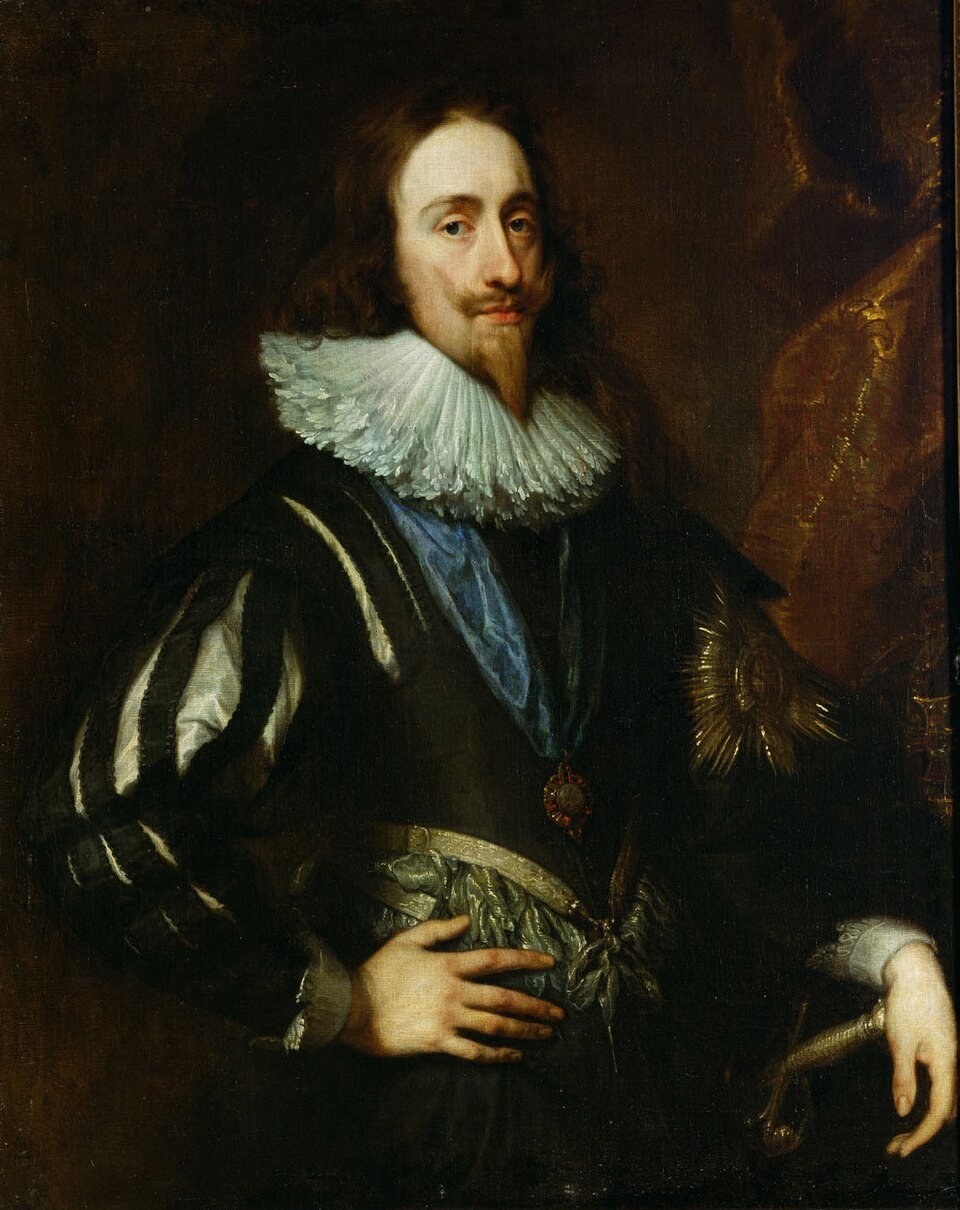
Early Stuart dress abandoned the Tudor ruff for the falling band, a wide collar of linen and lace lying flat on the shoulders, worn with a slashed doublet, full breeches and a broad-brimmed hat with a plume — the look Van Dyck painted and that took his name. Women wore softer gowns with a lowered waist and a wide lace collar.
Puritan dress was the same cut in plain dark cloth with plain linen, so the difference was material and trimming rather than shape.
On 7 October 1666 Charles II announced he would adopt a new fashion, and Pepys, who recorded both the announcement and the first appearance a week later, describes a long vest worn under a coat with a belt or sash. That combination of coat, waistcoat and breeches is the ancestor of the man’s suit, and its introduction as a deliberate court policy — partly to reduce dependence on French fashion — is unusually well documented.
Transition
The Georgian century refined the suit into its settled form and gave women the mantua, and English tailoring began the reputation it still trades on.