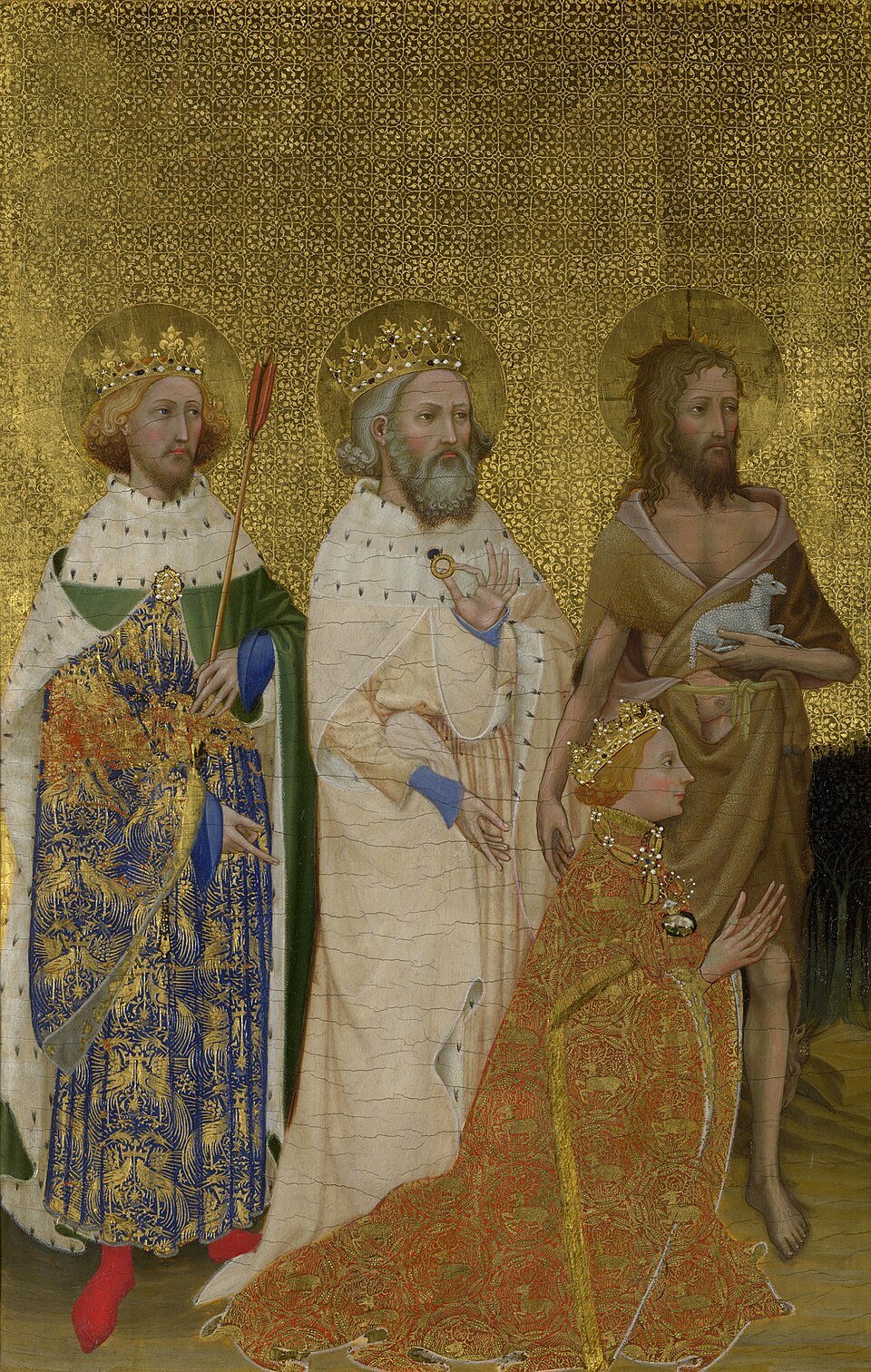
Overview
England’s medieval clothing story is inseparable from wool. The country grew the finest fleece in Europe and exported it raw for Flemish weavers to finish, and the wealth that came back paid for churches, wars and the dress described here — which is why the Lord Chancellor still sits on a woolsack.
Key garments and style
Early medieval dress is loose and largely uncut: a long tunic and mantle for both sexes, in wool over linen. The change comes in the fourteenth century, when tailoring learns to cut curved seams and set sleeves and to use buttons in quantity, and clothing begins to fit. The cotehardie is close-fitting and buttoned; men adopt a short doublet with hose, revealing the leg in a way that scandalised chroniclers; the houppelande, a full gown with enormous sleeves, provides the opposite extreme for both sexes.
Headwear became the display piece, with elaborate horned and heart-shaped forms for women in the fifteenth century.
Parliament legislated repeatedly, most comprehensively in 1363, assigning cloth, fur and colour by rank and income down to ploughmen — and reissued the statutes often enough to show they were not obeyed.
Transition
The early Tudors brought Renaissance and then Spanish influence, and English wool began to be woven at home rather than shipped abroad.