Overview
Tudor dress was built rather than draped. Buckram, boning, padding and the farthingale gave the body a shape it does not have, and the century’s clothing is best understood as engineering in cloth — with the law specifying who was allowed which materials.
Key garments and style
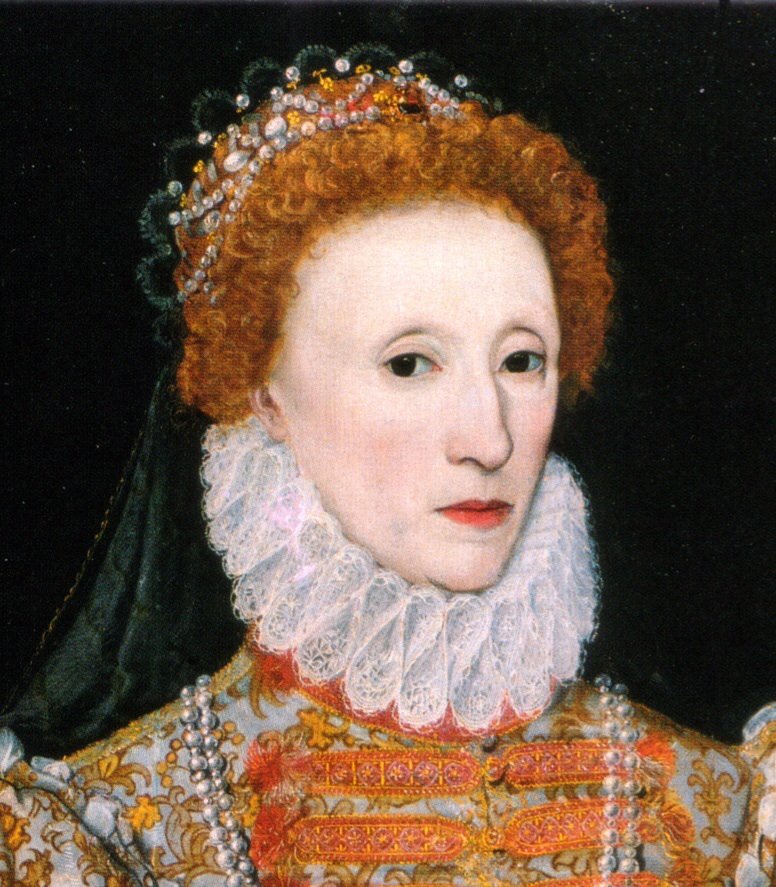
Men wore a doublet, often padded, over a shirt, with a jerkin above it and trunk hose below, and from mid-century an increasingly tall and rigid ruff at the neck, held with starch and wire. Women wore a boned bodice over a farthingale — a hooped or padded understructure that made the skirt a cone or, later, a drum — with the ruff and often the French hood.
Black was the expensive colour. Deep black required repeated dyeing with costly materials, so the sober-looking black gowns in portraits are displays of wealth rather than restraint, and they set off the gold embroidery, pearls and blackwork on the linen beneath.
Sumptuary statutes were reissued throughout the century, reserving purple silk and cloth of gold to the royal family and grading sables, velvets and satins down the ranks — legislation that describes an anxiety about display more reliably than it controlled it.
Transition
Under the Stuarts the structure came out: the ruff fell into a soft collar, the farthingale went, and Cavalier dress traded rigidity for lace and drape.