Overview
Anglo-Saxon dress is known from two very different sources that cover two different halves of the period: furnished graves for the pagan centuries, where the metalwork survives and the cloth does not, and manuscripts and a handful of relics for the Christian ones. The change between them is real and not only a change in evidence.
Key garments and style
Early women wore a tubular gown fastened at both shoulders with a pair of brooches, worn over an underdress, with strings of beads slung between the brooches and a girdle hung with keys, knives and a work-box. Because brooches survive and cloth does not, the position of the metal in a grave is how the garment is reconstructed at all, and brooch styles differ sharply by region — cruciform in Anglian areas, saucer and disc in Saxon ones.
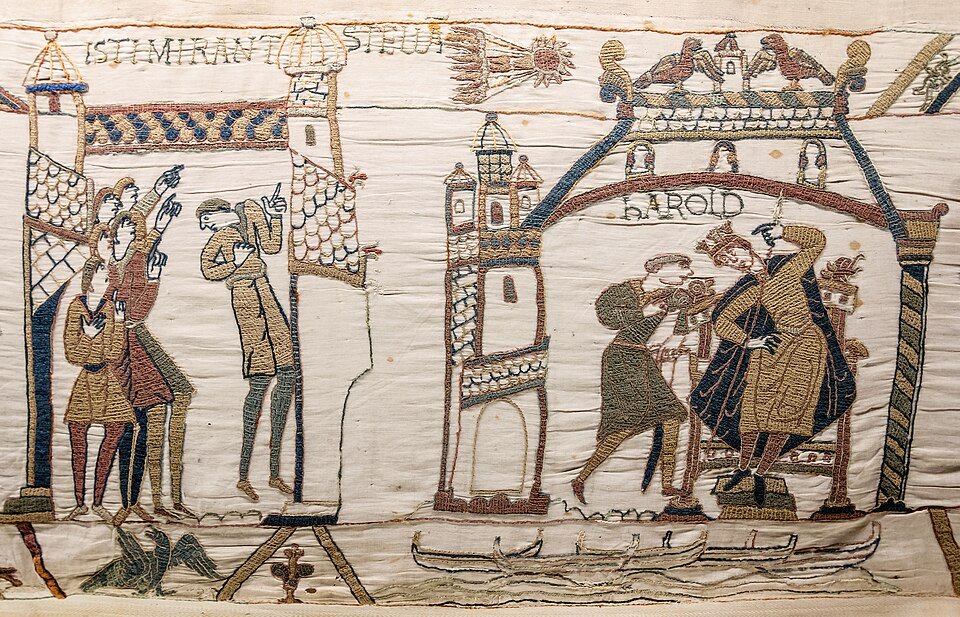
With conversion, furnished burial stops and the paired brooches go with it. Later women appear in a long gown with a headcloth covering the hair, and men in a knee-length tunic, a cloak pinned at the shoulder, and leg bindings wound over hose.
The finest surviving Anglo-Saxon needlework is not clothing but vestment: the stole and maniple made for Bishop Frithestan in the early tenth century and later placed in St Cuthbert’s coffin, worked in silk and gold thread to a standard that made English embroidery an export.
Transition
The Norman Conquest brought continental cut and a new aristocracy, and English embroidery went on being prized under it.