Overview
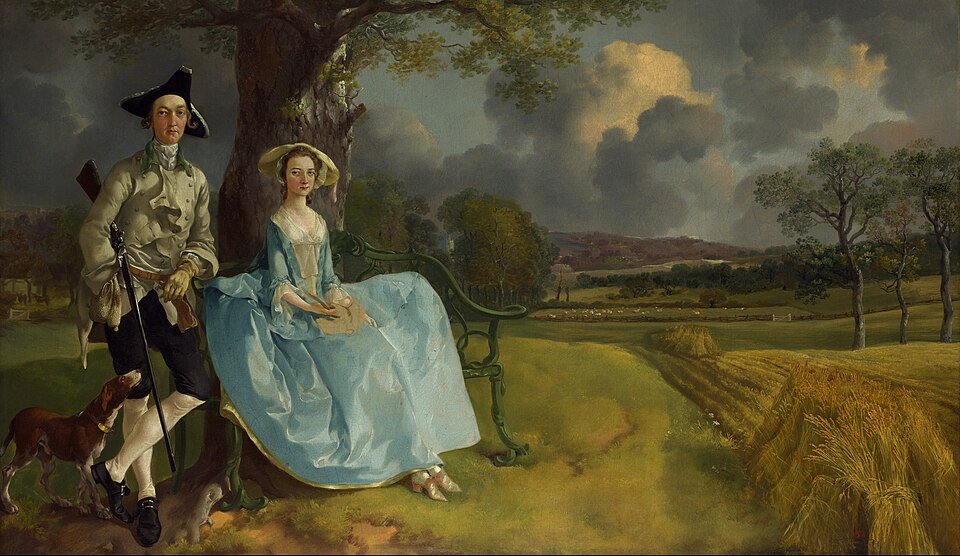
The Georgian century ends with British menswear taking over Europe, and the mechanism is worth naming: England’s contribution was not court display but cloth and cut. While Paris set women’s fashion, English tailors and English wool built the plain, well-made coat that became the modern suit.
Key garments and style
Women’s dress ran from the mantua through the wide side-hooped gowns of mid-century court dress and the sacque with its loose back pleats, to the collapse of all of it after 1790 into the high-waisted neoclassical gown in white muslin — one of the fastest and most complete silhouette changes on record.
Men’s formal dress began the century embroidered and coloured. The macaroni of the 1760s and 1770s, young men returned from the Grand Tour in exaggerated wigs and continental tailoring, were mocked for it, and the reaction that followed is the important part.
Beau Brummell made restraint the point: dark plain coat, immaculate linen, perfectly cut and fitted, with the effort concentrated where it could not be seen. That inversion — status shown through fit and cloth rather than colour and ornament — is the foundation of men’s dress ever since, and it is why the tailoring survived when the embroidery did not.
Transition
The Victorians took the dark suit and made it universal, and put women back into corsets and hoops.