Overview
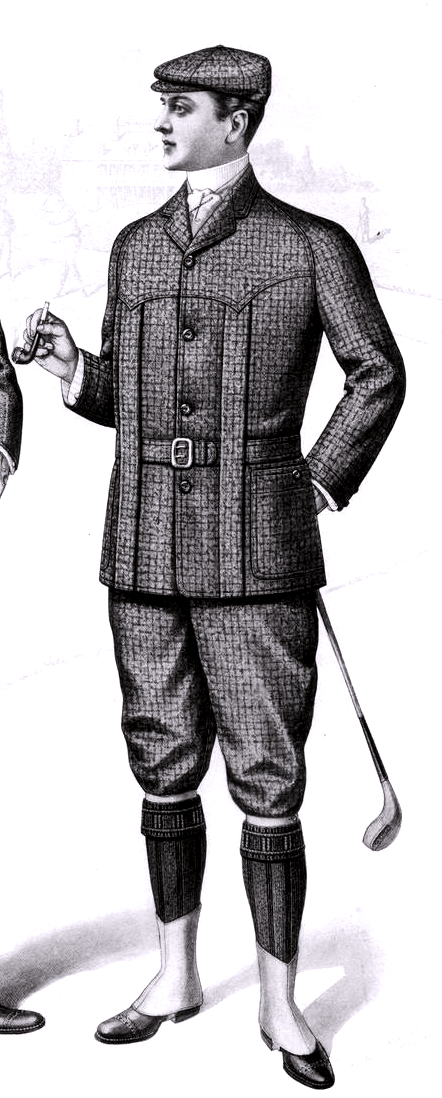
The pleats are the mechanism: two vertical box pleats down the back and usually two more at the front open as the arms come up, giving the shoulders several inches of movement that a fitted jacket does not have. A belt of the same cloth, either sewn on or passing through loops, holds the fullness at the waist. It is made in heavy tweed with large patch pockets, cut to the hip, and worn with breeches for shooting and with ordinary trousers otherwise.
How it is worn
It goes on over a waistcoat and shirt and is buttoned high, with the belt fastened last and the pleats left free to work. The pockets take cartridges, which is why they are patch pockets with flaps rather than set in. Worn for shooting it goes with breeches, long stockings and boots; worn for cycling or walking — which is where most Victorians met it — it goes with whatever the wearer has on, and this is where the modern sports jacket begins.
History
The name is usually attached to Norfolk, and to the Duke of Norfolk’s estate or the shooting parties on it, but the connection is not documented and the jacket is better dated than explained: it appears in the 1860s, spreads through the 1880s with country sport and cycling, and by 1900 is standard leisure wear across Britain, Europe and America. Its pleated, belted shape survives in Norfolk-style shooting coats and, loosened and unbelted, in the sports jacket.