Overview
The Old Kingdom lasted from c. 2686 to c. 2181 BC, spanning the 3rd through 6th Dynasties, with its capital at Memphis. Kingship was strongly centralized and supported by an extensive bureaucracy.
Key developments
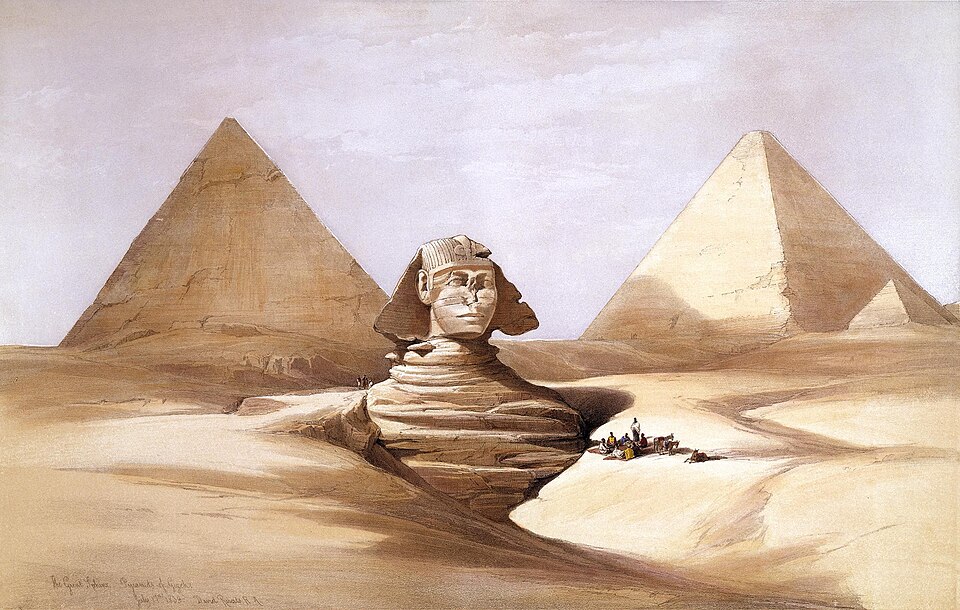
Djoser’s Step Pyramid at Saqqara (3rd Dynasty, c. 2650 BC), attributed to Imhotep, is among the earliest large monumental stone buildings. In the 4th Dynasty the Giza pyramids of Khufu, Khafre, and Menkaure rose, along with the Great Sphinx, generally dated to Khafre’s reign. Under the 5th Dynasty the sun god Ra rose to prominence and was honored with sun temples, and the Pyramid Texts inscribed in pyramids of the late 5th and 6th Dynasties are among the oldest known religious texts.
End and transition
The very long reign of Pepi II in the 6th Dynasty, the growing power of provincial governors (nomarchs), and possibly failing Nile floods and drought — the last remain scholarly hypotheses — undermined central authority. Around 2181 BC the state collapsed, opening the First Intermediate Period.