Overview
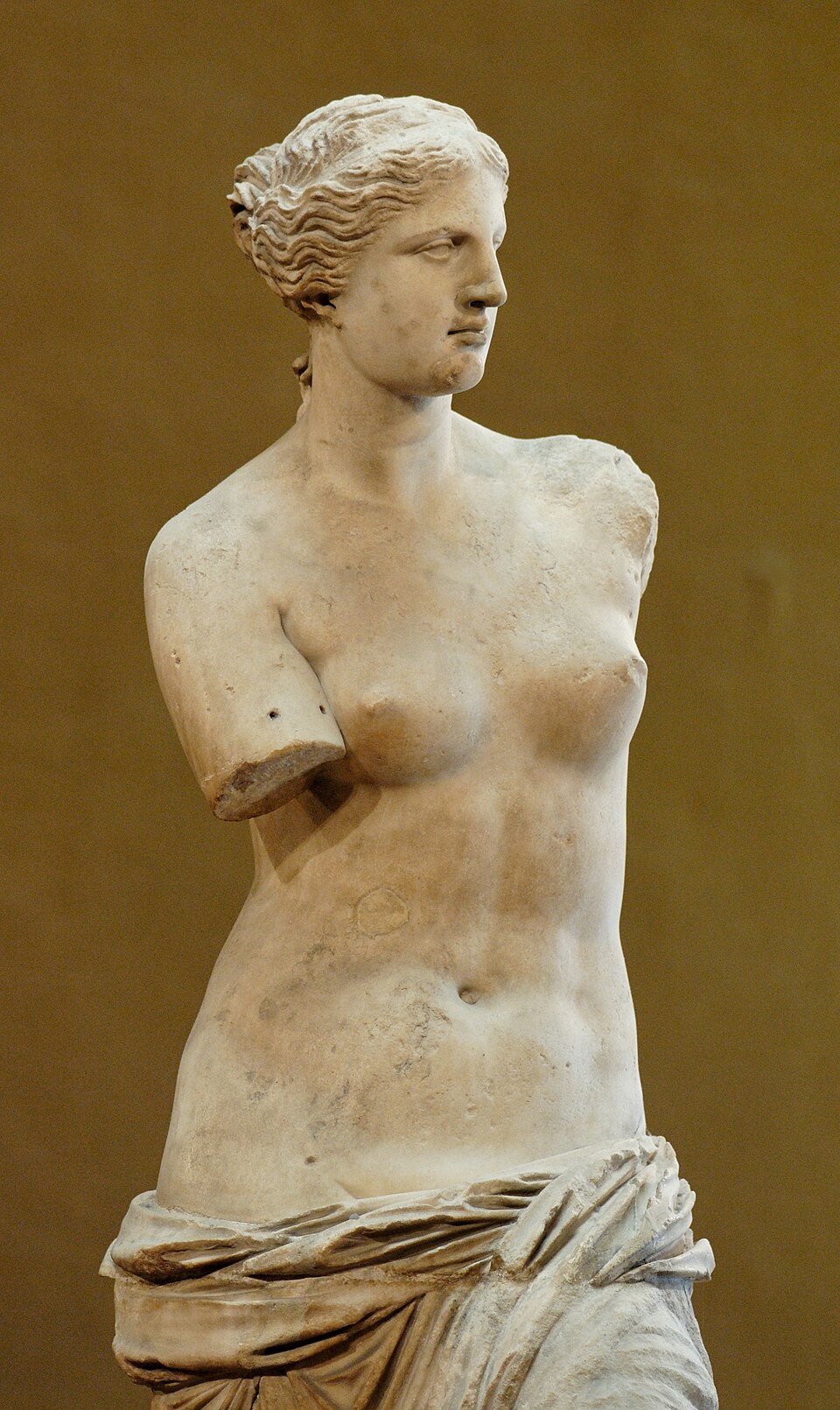
The Venus de Milo is a marble statue slightly over two metres tall, generally identified as Aphrodite, the Greek goddess of love. It was carved in the Hellenistic tradition around 150–125 BC and was discovered by a farmer on the Aegean island of Milos in 1820.
Description
The goddess is shown half-draped, her robe slipping from her hips, in a spiral pose that invites the viewer to move around her. The arms were already lost when the statue was found, and their original position remains debated. An inscribed base naming Alexandros of Antioch was recorded at the find but later lost, so the attribution to that sculptor, like much about the work, rests on early accounts rather than surviving evidence.
History and legacy
The statue was acquired for France shortly after its discovery and presented to the Louvre in 1821. Promoted in the 19th century as the ideal of classical beauty, it became one of the most reproduced images in art, and the mystery of the missing arms only added to its fame. It remains among the Louvre’s most visited works alongside the Winged Victory of Samothrace.