Overview
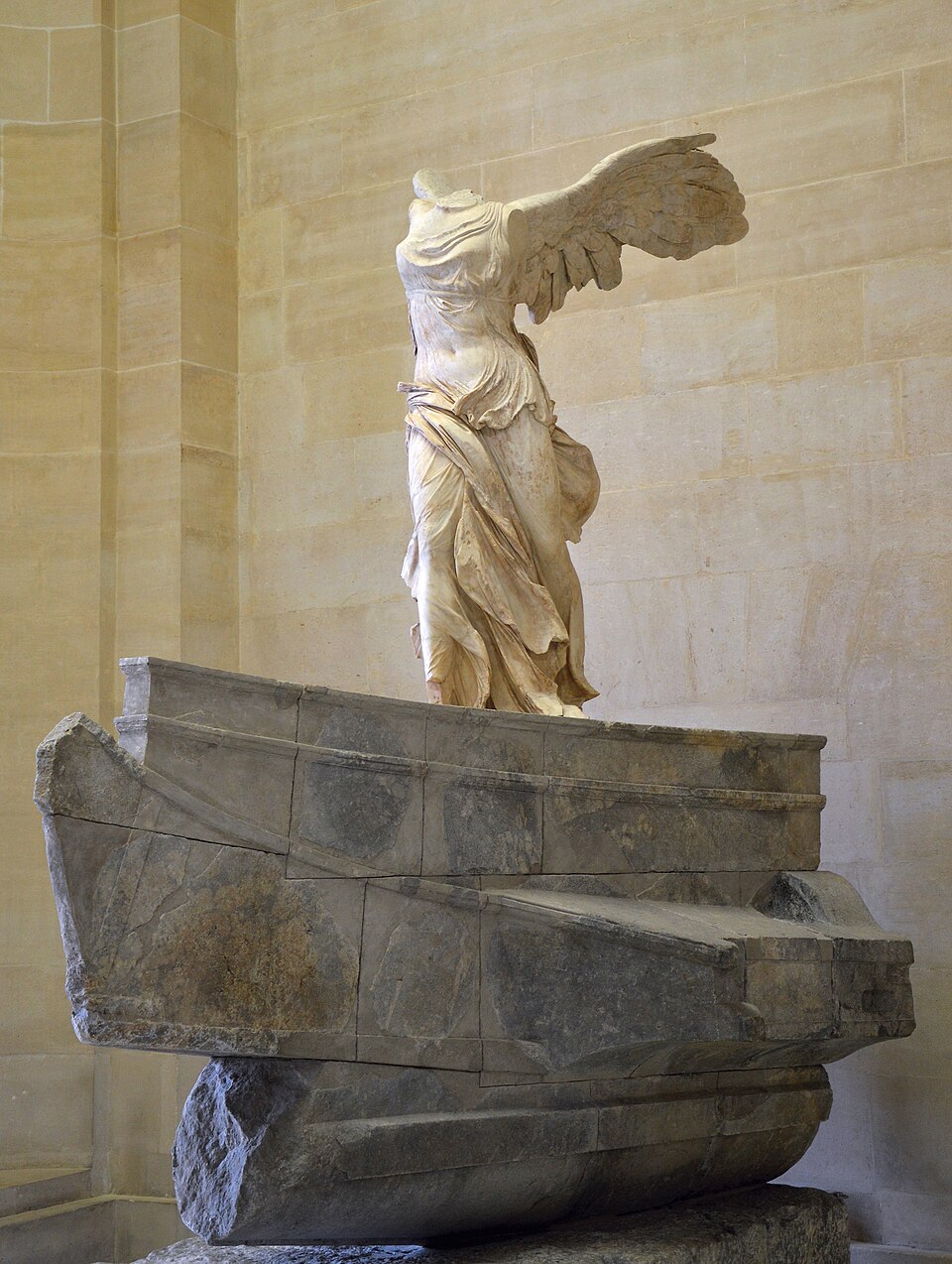
The Winged Victory of Samothrace is a marble statue of Nike, the Greek goddess of victory, standing about 2.4 metres tall on a base shaped like the prow of a warship. It was carved around 200–190 BC and stood in the sanctuary of the Great Gods on the island of Samothrace, probably commemorating a naval victory.
Description
The goddess is caught in the instant of alighting, wings still spread, her drapery pressed against her body by the sea wind in deep, swirling folds. The head and arms are lost, yet the torsion of the body and the theatrical setting on the prow show Hellenistic sculpture at its most dramatic. A right hand found at the site in 1950 is displayed beside the statue.
History and legacy
The statue was discovered in 1863 by the French diplomat Charles Champoiseau and shipped to the Louvre, where since 1884 it has crowned the Daru staircase. Which victory it celebrated, and which workshop carved it — Rhodes is often proposed — remain debated. It stands with the Venus de Milo among the most celebrated Greek works in the museum, and its image has echoed through art and design ever since.