What happened
In September 490 BC the Athenians — joined only by little Plataea, since Sparta arrived late, delayed by a festival — met Darius I’s punitive expedition on the plain of Marathon. Under Miltiades the outnumbered Athenians attacked at a run, with strengthened wings and a deliberately thin center; the wings crushed their opposites and turned inward in a double envelopment, and the Persians fled to their ships. Perhaps 10,000 Greeks faced some 25,000 Persians, though ancient figures are unreliable. Herodotus reports 192 Athenian dead against 6,400 Persian — his figures, and nearly all narrative sources for this war are Greek.
Background
The expedition came to punish Athens and Eretria for aiding the Ionian Revolt against Persia. Eretria had been sacked only days before the battle.
Consequences
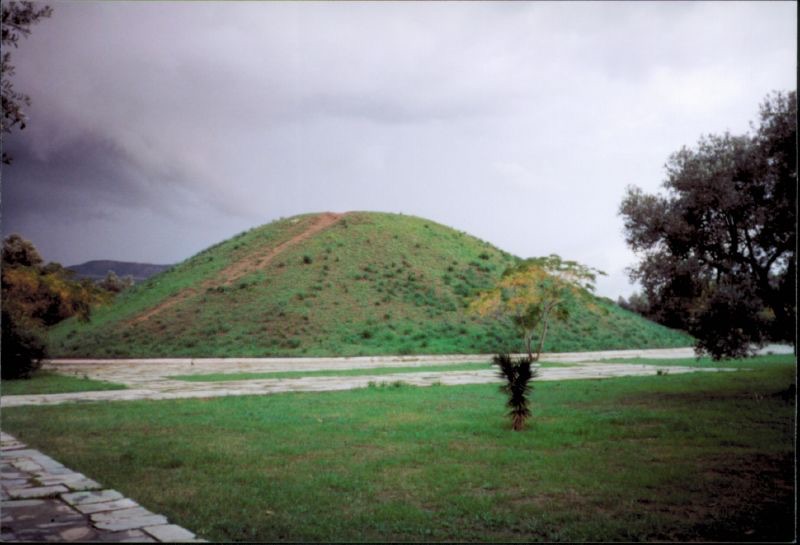
The victory gave enormous confidence to Athens and its young democracy. Darius planned revenge, which Xerxes delivered ten years later. The Athenian dead were buried in a mound, the soros, still visible at Marathon. The tale of the messenger who ran to Athens with news of the victory and died on arrival belongs to later tradition — in Herodotus, Pheidippides runs to Sparta before the battle. That conflation inspired the modern marathon race.