What happened
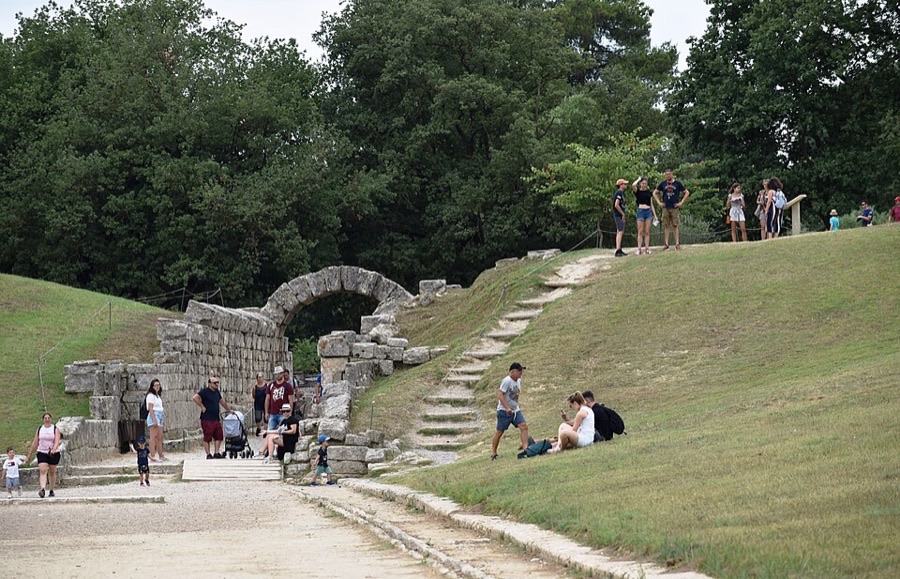
Traditionally founded in 776 BC at Olympia in honor of Zeus, the games were held every four years for more than a millennium, and the four-year Olympiad became a Greek dating unit. Events grew from the single stadion sprint to include wrestling, boxing, pankration, the pentathlon, and chariot races. Victors won only an olive wreath at Olympia, but fame and rewards awaited them at home; famous champions included Milo of Croton, six-time winner in wrestling.
Background
The Olympics were the greatest of the four panhellenic festivals, alongside the Pythian games at Delphi, the Nemean, and the Isthmian, and were open to free Greek men. A sacred truce, the ekecheiria, protected travelers to the games — though its scope is often overstated, and wars did not all stop. Married women could not attend (the priestess of Demeter excepted); women had a separate festival of Hera at Olympia, the Heraia.
Consequences
Under Christian Rome the games came to an end — conventionally with Theodosius I’s ban on pagan festivals in AD 393, though the exact end is debated. They were revived as the modern Olympic Games at Athens in 1896, and the ancient site of Olympia is a UNESCO World Heritage site.