What happened
In the summer of 479 BC the allied Greek army met the Persian land force under Mardonius near Plataea in Boeotia. The Spartan regent Pausanias commanded the allies, with the Athenians under Aristides. After days of maneuvering and raids on supply lines, a botched Greek night withdrawal drew Mardonius into a general attack; the Spartan and Tegean line broke the Persian infantry, Mardonius was killed, and the Persian camp was stormed. Tradition makes this the largest hoplite army ever assembled — Herodotus counts nearly 40,000 hoplites among some 110,000 Greeks against a larger Persian force — but all the figures come from Greek sources and are unreliable.
Background
Plataea was the closing land battle of the Greco-Persian Wars, the Persian invasion of Greece. After the naval defeat at Salamis in 480 BC, King Xerxes returned to Asia, leaving Mardonius to winter in Greece with the land army. Mardonius retook and again burned Athens, and tried to split the Greek alliance with offers to the Athenians, which they refused.
Consequences
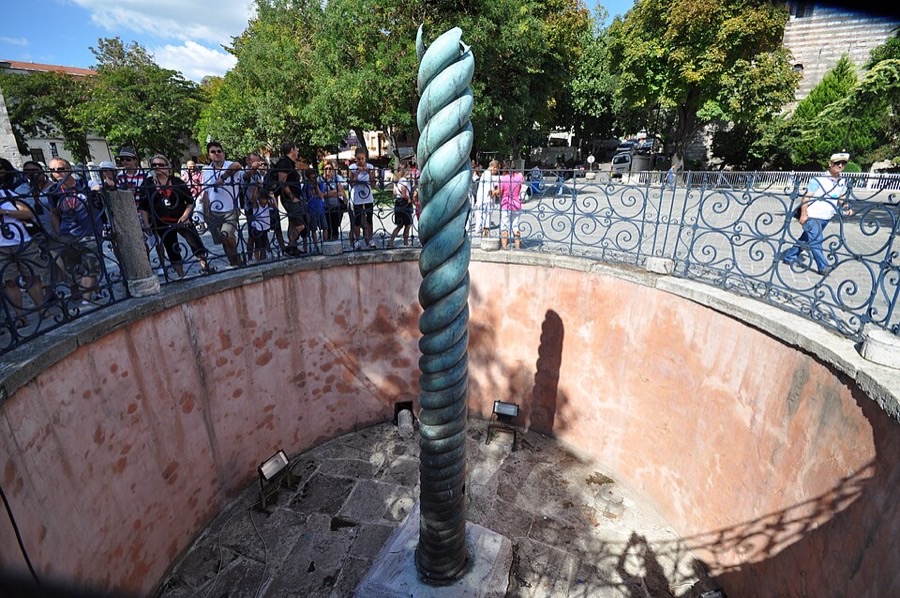
The victory destroyed the Persian land force in Greece and ended the invasion. Per tradition, the Greek fleet destroyed Persian forces at Mycale in Asia Minor the same summer, and the double victory closed the campaign. The allies dedicated the Serpent Column at Delphi, inscribed with the names of the allied cities; moved in antiquity to Constantinople, it still stands. Plataea itself was honored, and the wars wound on overseas until about 449 BC.