Overview
The classical period spans 480–323 BC, from the repulse of Xerxes’ invasion to the death of Alexander. It is the age that produced much of Greece’s enduring legacy. Its poles were Athens, where democracy and the arts flowered, and Sparta, a militarized society sustained by helot labor.
Key developments
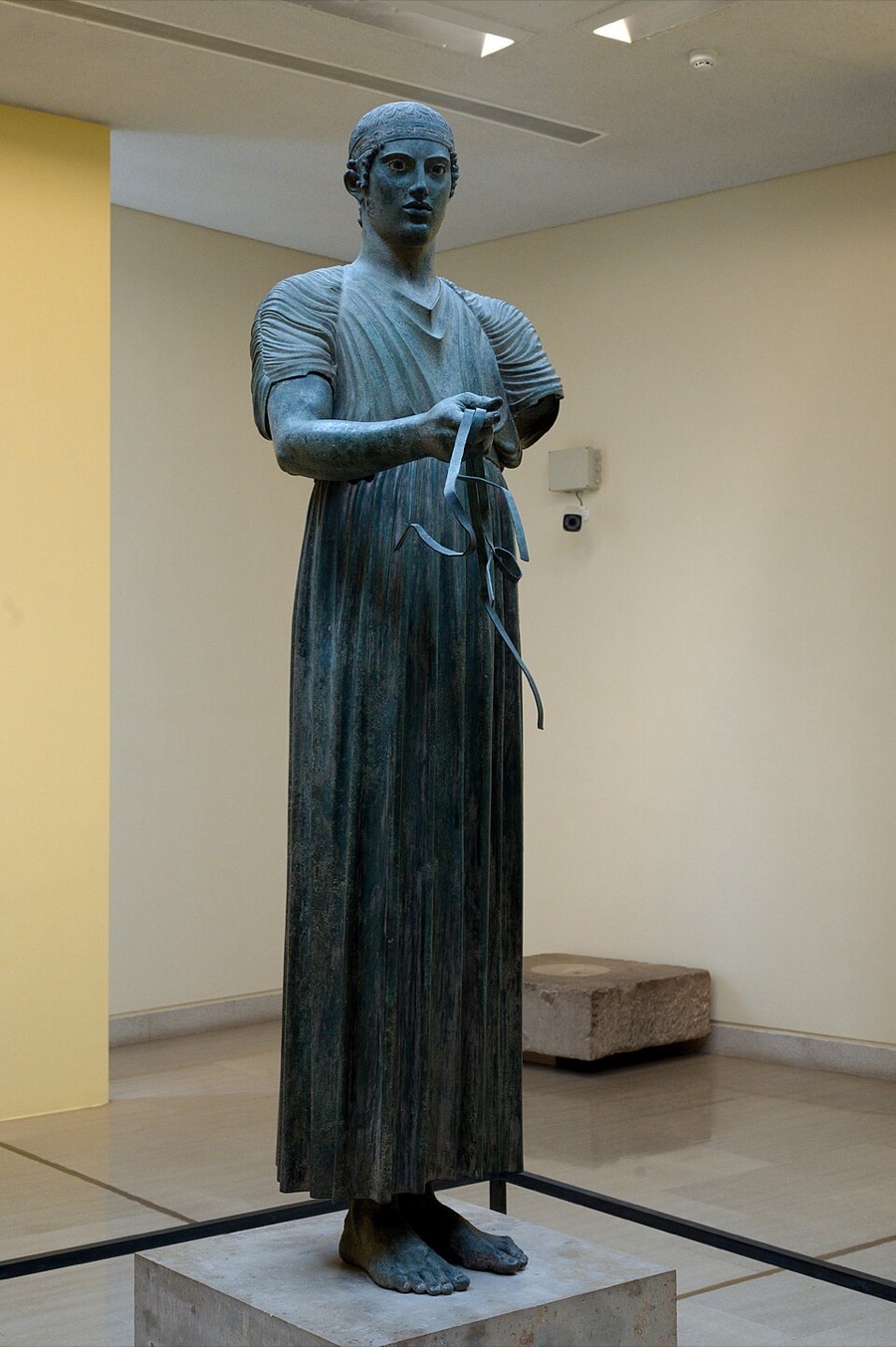
Athens’ golden age came under Pericles: radical democracy with its assembly, juries, and pay for office; the Delian League turned into an empire; and the Parthenon. Aeschylus, Sophocles, and Euripides wrote tragedy and Aristophanes comedy, while Herodotus and Thucydides founded history and Socrates moral philosophy. The Peloponnesian War (431–404 BC) between the Athenian and Spartan blocs exhausted the Greek world, and Athens fell in 404. Spartan and then Theban supremacy followed — Leuctra in 371 BC, and Epaminondas — amid grinding inter-polis warfare through the 4th century. It was also philosophy’s great century, with Plato’s Academy and Aristotle’s Lyceum, alongside Hippocrates in medicine, Phidias and Praxiteles in sculpture, and the classical orders in architecture.
End and transition
Philip II of Macedon built a new army that defeated the city-states at Chaeronea in 338 BC, uniting Greece under Macedonian hegemony in the League of Corinth. His son Alexander’s conquest of Persia (334–323 BC) closed the era. The world of the polis gave way to the Hellenistic kingdoms.