Overview
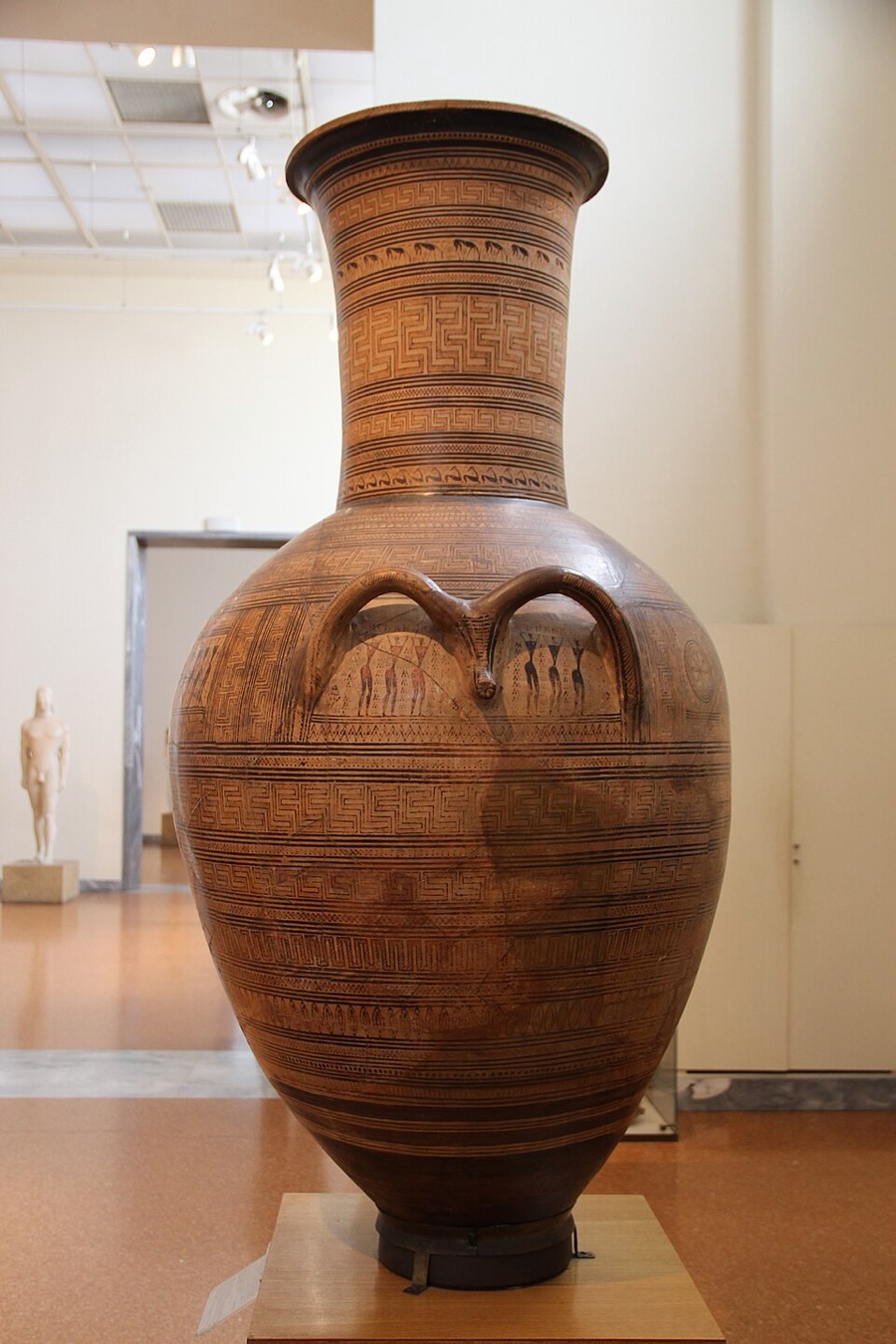
In the centuries after the Mycenaean collapse, c. 1100–c. 800 BC, the palaces were gone, writing in Linear B was lost, population and settlements shrank, and monumental building and much long-distance trade ceased. Yet the label is increasingly qualified: finds such as the rich tenth-century building at Lefkandi reveal more continuity and outside contact than the old picture of total darkness, and scholars now often prefer the term Early Iron Age.
Key developments
Peoples were on the move: later tradition tells of an Ionian migration to the Aegean islands and the Anatolian coast. Iron replaced bronze as the everyday metal. Oral poetry flourished — the tradition that would culminate in Homer — and as chiefdoms gave way to settled communities, the basic social structures of the later polis were taking shape.
End and transition
The period ends around 800 BC with recovery: population growth, renewed trade with the east, and the adaptation of the Phoenician alphabet to write Greek — among the first scripts to record full vowels.