Overview
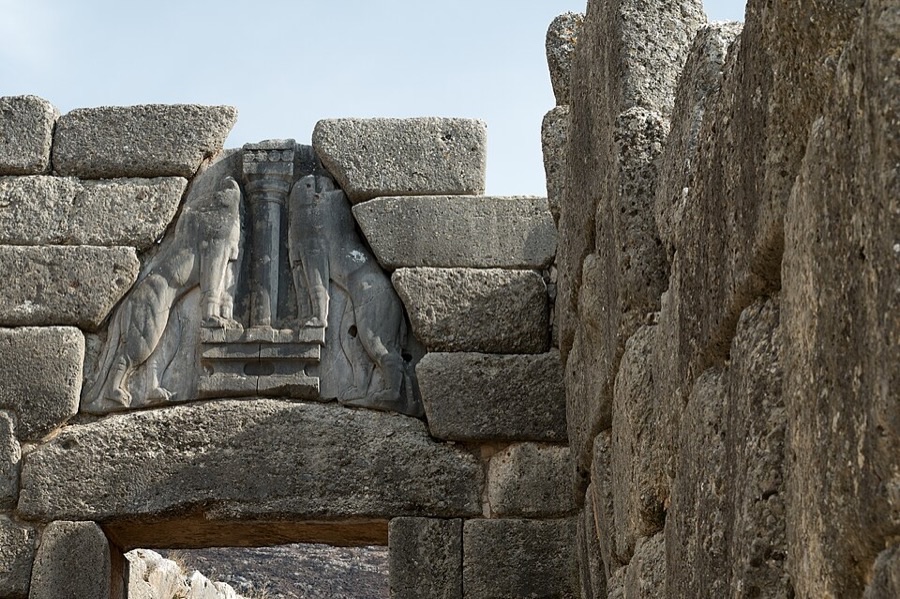
The Mycenaeans built massive cyclopean walls and the Lion Gate at Mycenae, and their shaft graves yielded rich gold work, including the so-called Mask of Agamemnon. That attribution was Schliemann’s romantic guess: the mask is centuries older than any possible date for a Trojan War.
Key developments
Linear B tablets, deciphered in 1952 by Michael Ventris, record an early form of Greek — palace inventories, rations, and names of gods recognizable from later Greek religion, such as Zeus, Poseidon, and Dionysus. Theirs was a warrior-trader culture: they took over Minoan Crete around c. 1450 BC and traded and raided across the eastern Mediterranean. Hittite texts mention an Ahhiyawa generally identified with the Mycenaean Greeks.
End and transition
The palaces burned c. 1200–c. 1100 BC in the wider Late Bronze Age collapse; the causes — raiders including the Sea Peoples, drought, internal breakdown — remain debated, and writing was lost along with the palaces. In the standard reading, the memory of this age, transformed by centuries of oral poetry, became the world of Homer’s epics and of Greek heroic myth.