What happened
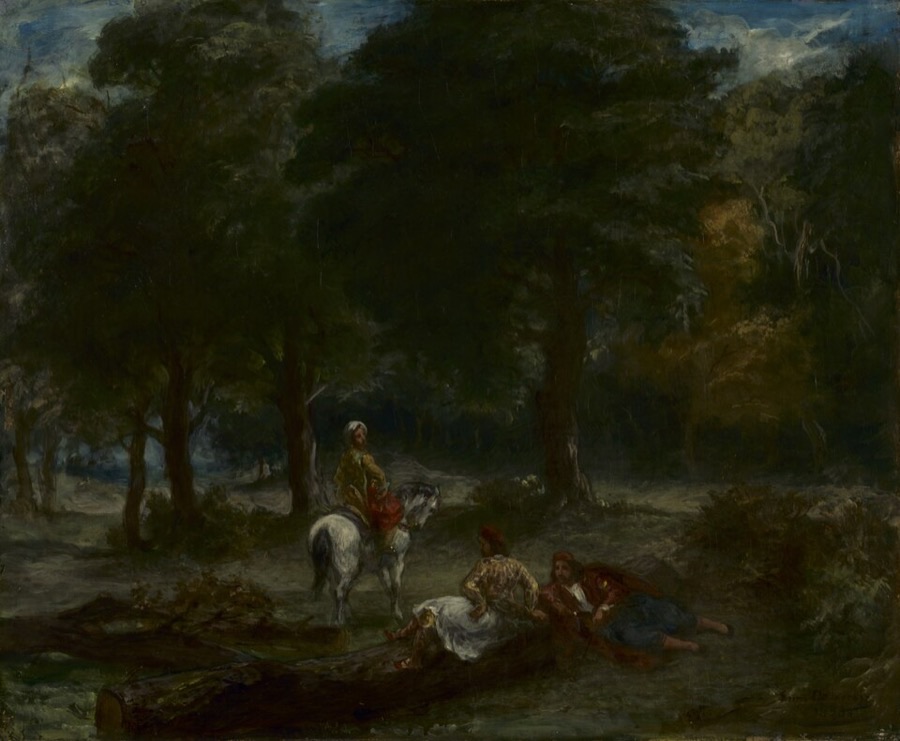
Risings spread across the Peloponnese from March 1821, and March 25, entwined with the feast of the Annunciation, is Greece’s national day. The rebels won early successes, though the fall of Tripolitsa in 1821 was accompanied by a massacre of the town’s Muslim population; Ottoman reprisals saw Patriarch Gregory V hanged, and in the Chios massacre of 1822 tens of thousands were reportedly killed or enslaved — a horror Delacroix’s painting carried across Europe. Civil wars among the revolutionaries in 1823–25 nearly wrecked the cause, and from 1825 Egyptian forces under Ibrahim Pasha reconquered much of the Peloponnese; the fall of Missolonghi in 1826 became a European symbol of the resistance. The turn came with the powers: an allied fleet destroyed the Ottoman-Egyptian fleet at Navarino in 1827, and Russia’s war of 1828–29 forced the Ottomans to concede.
Background
European philhellenism sent volunteers and money to the cause. Lord Byron, who died at Missolonghi in 1824, became its emblem.
Consequences
Autonomy came in 1829, and the London Protocol of 1830 recognized full independence; the borders and a Bavarian king, Otto, were settled in 1832. Ioannis Kapodistrias, chosen as first governor in 1827, was assassinated in 1831. The new state was a small one confined to the south, leaving most Greeks outside it — the seed of the Megali Idea, the irredentist vision of uniting them that became the driving idea of nineteenth-century Greece.