Overview
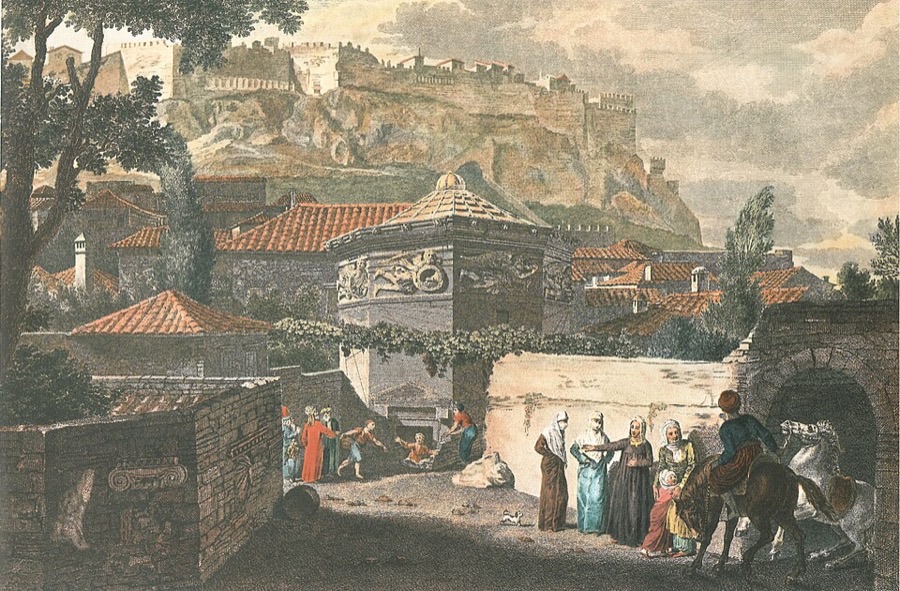
From the fall of Constantinople in 1453 to the outbreak of the War of Independence in 1821, most of Greece lived under Ottoman rule for nearly four centuries — the period Greek memory knows as the Tourkokratia, the era of Turkish rule. Venetian-held islands followed separate paths: Crete remained Venetian until 1669, and the Ionian Islands — with the exception of Lefkada (Ottoman c. 1479–1684) — were never under Ottoman rule. Within the empire, Orthodox Christians formed a self-administering religious community (millet) under the Patriarch of Constantinople, and the church preserved language and identity. Taxation in the earlier centuries included the devshirme, a levy of Christian boys, though the practice declined through the seventeenth century and effectively ended in the early eighteenth (the last levies around 1705).
Key developments
Greek elites prospered within the empire: the Phanariot families of Constantinople rose to high office, serving as governors of the Danubian principalities, while Greek merchants and shipowners built diaspora networks across Europe — the material base of the later independence movement. In the mountains, klephts (bandit-rebels) and armatoloi militias kept a tradition of resistance alive, and risings flared with foreign wars; the Russian-instigated Orlov revolt of 1770 was harshly suppressed. In the eighteenth century the Greek Enlightenment spread through diaspora-funded schools and publishing, from the revolutionary vision of Rigas Feraios (executed 1798) to the language work of Adamantios Korais. The secret society Filiki Eteria, founded in Odessa in 1814, organized the revolution itself.
End and transition
The rising prepared by the Filiki Eteria broke out as the War of Independence in March 1821. With it, nearly four centuries of Ottoman rule over Greece came to an end.