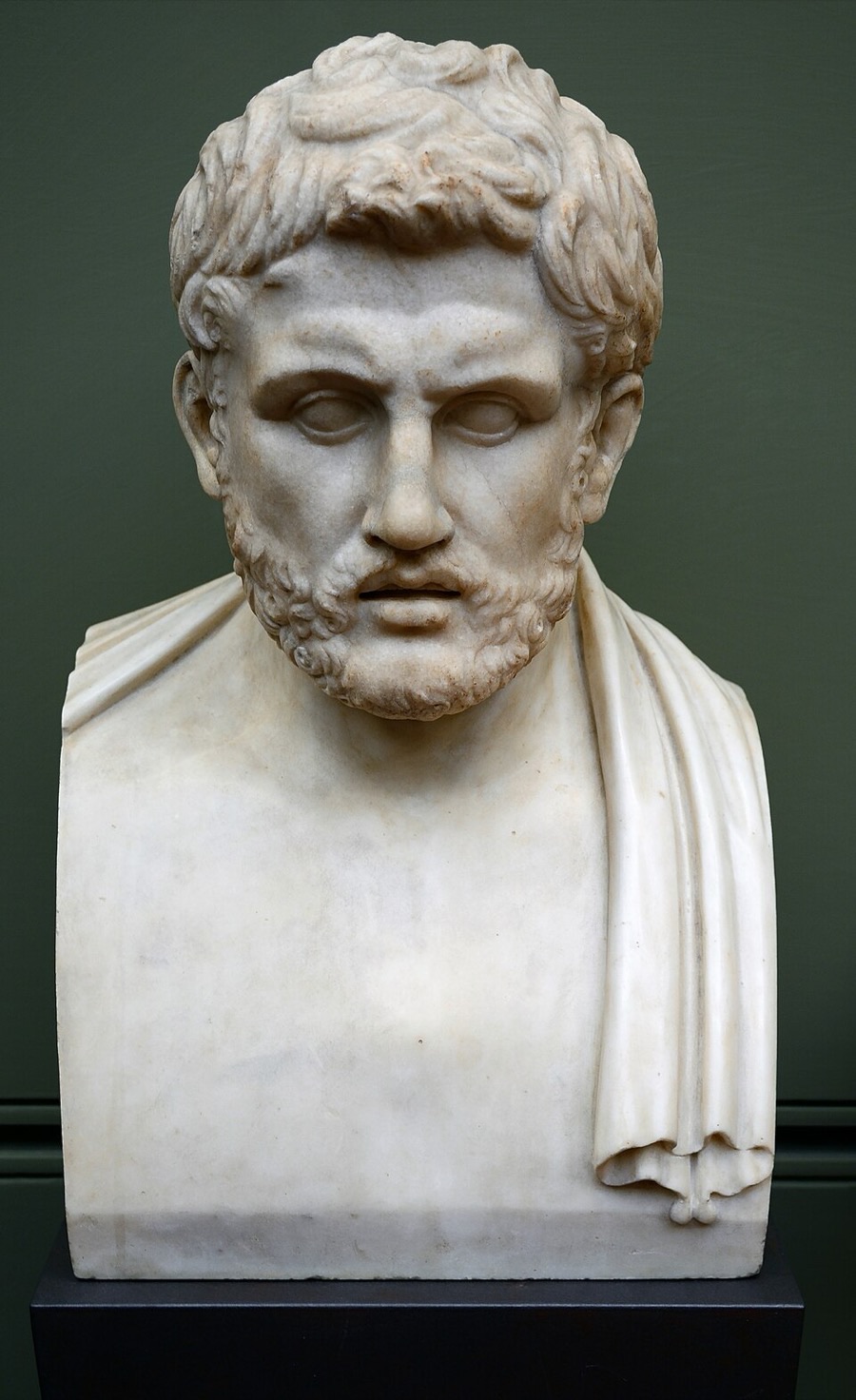
Who they were
Alcibiades (c. 450–404 BC) was an Athenian aristocrat, ward of Pericles and companion of Socrates; the tipsy encomium of Socrates that Plato gives him in the Symposium is the famous portrait. The ancient verdict made him brilliant, magnetic, and unscrupulous: a champion chariot-victor at Olympia and the champion of the war party.
What they did
He pushed Athens into the Sicilian expedition of 415 BC; on its eve came the mutilation of the herms and the scandal of the profaned Mysteries, and when he was recalled for trial he defected to Sparta, advising the Spartans to fortify Decelea and to aid Syracuse — advice that gravely damaged Athens. Falling out at Sparta, he moved to the Persian satrap Tissaphernes, then engineered his own recall by Athens (411–407 BC), won real victories in the Hellespont — Cyzicus in 410 BC — and returned in triumph in 407 BC. Dropped again after his lieutenant lost at Notium in 406 BC, he withdrew to Thrace; after Athens’ fall he was murdered in Phrygia in 404 BC, and whether the instigation was Spartan, Persian, or private, the sources differ.
Legacy
Alcibiades became the archetype of genius without loyalty, the warning figure of the ancient moralists. In the standard reading he remains the standing what-if of the Peloponnesian War.