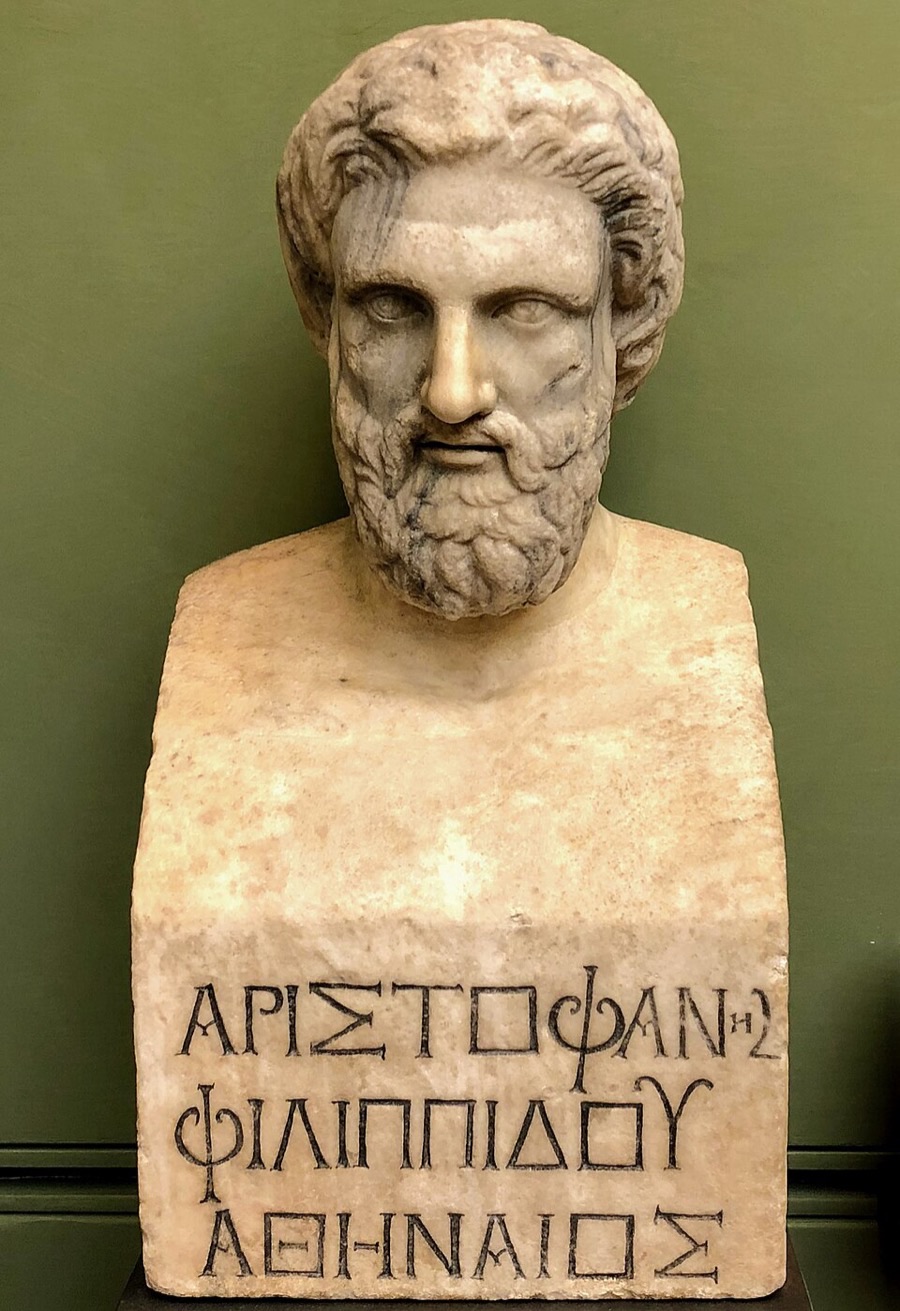
Who they were
Aristophanes (c. 446–c. 386 BC) was the master of Athenian Old Comedy. Of some forty plays, eleven survive — the only complete Old Comedies we have.
What they did
His political satire granted no immunity to the powerful: in The Knights (424 BC) he attacked the demagogue Cleon by name on stage while Cleon led the state — a striking measure of the license of Athenian comic speech. Across the Peloponnesian War he wrote anti-war comedies — The Acharnians, Peace, and Lysistrata (411 BC), whose women’s strike to end the war is his most famous plot. The Clouds (423 BC) caricatured Socrates as a sophist; Plato’s Apology counts the caricature among the old slanders that doomed him. In The Frogs (405 BC), Dionysus judges Aeschylus against Euripides in Hades — comedy as literary criticism.
Legacy
His later plays, Assemblywomen and Wealth, show Old Comedy softening toward the comedy of manners. His work remains the window onto democratic Athens laughing at itself — at its politicians, philosophers, poets, and wars — and a foundation of satirical comedy ever since.