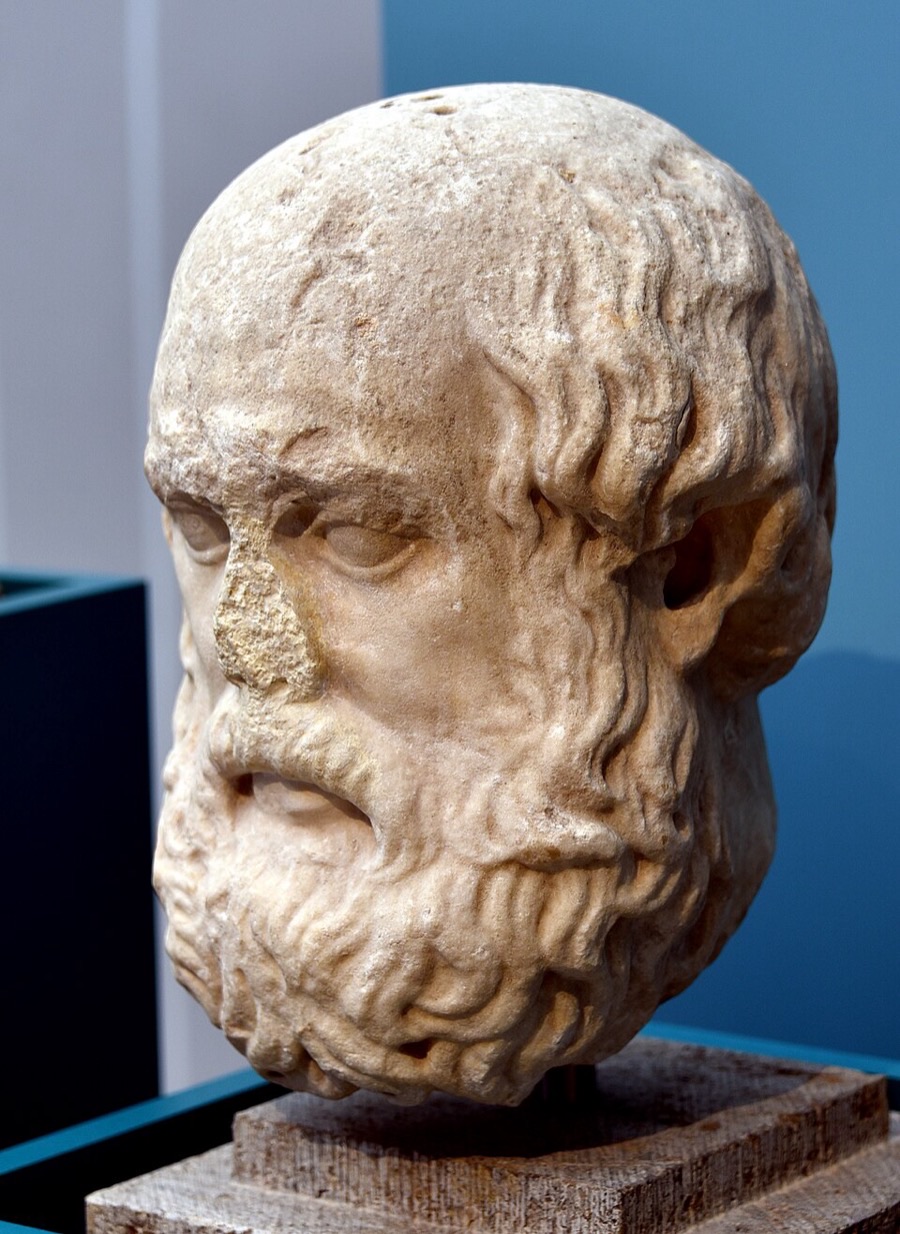
Who they were
Euripides (c. 480–406 BC) was the youngest of the three great tragedians of Athens. In his lifetime he won only four or five first prizes, and Aristophanes mocked him constantly. Late in life he left for the court of Archelaus of Macedon, where he died in 406 BC; the tale that he was killed by hunting dogs is legend.
What they did
Of some 90 plays, 18 or 19 survive — more than those of the other two great tragedians combined, thanks in part to the chance survival of an alphabetical manuscript volume. His famous works include Medea, Hippolytus, The Trojan Women (415 BC), and the posthumous Bacchae, on Dionysus and the limits of reason. The Trojan Women is often read against the sack of Melos months earlier, though the connection is debated. His style — psychological realism, characters arguing like contemporary sophists, gods questioned, ordinary speech, strong and disturbing female protagonists — made him controversial in his lifetime.
Legacy
After his death he became the most read and performed of the tragedians; Aristotle reports the epithet that he was the most tragic of the poets. Aristophanes’ The Frogs stages a contest between him and Aeschylus in the underworld — among the first works of literary criticism. The standard critical judgment holds that he is the tragedian who feels most modern.