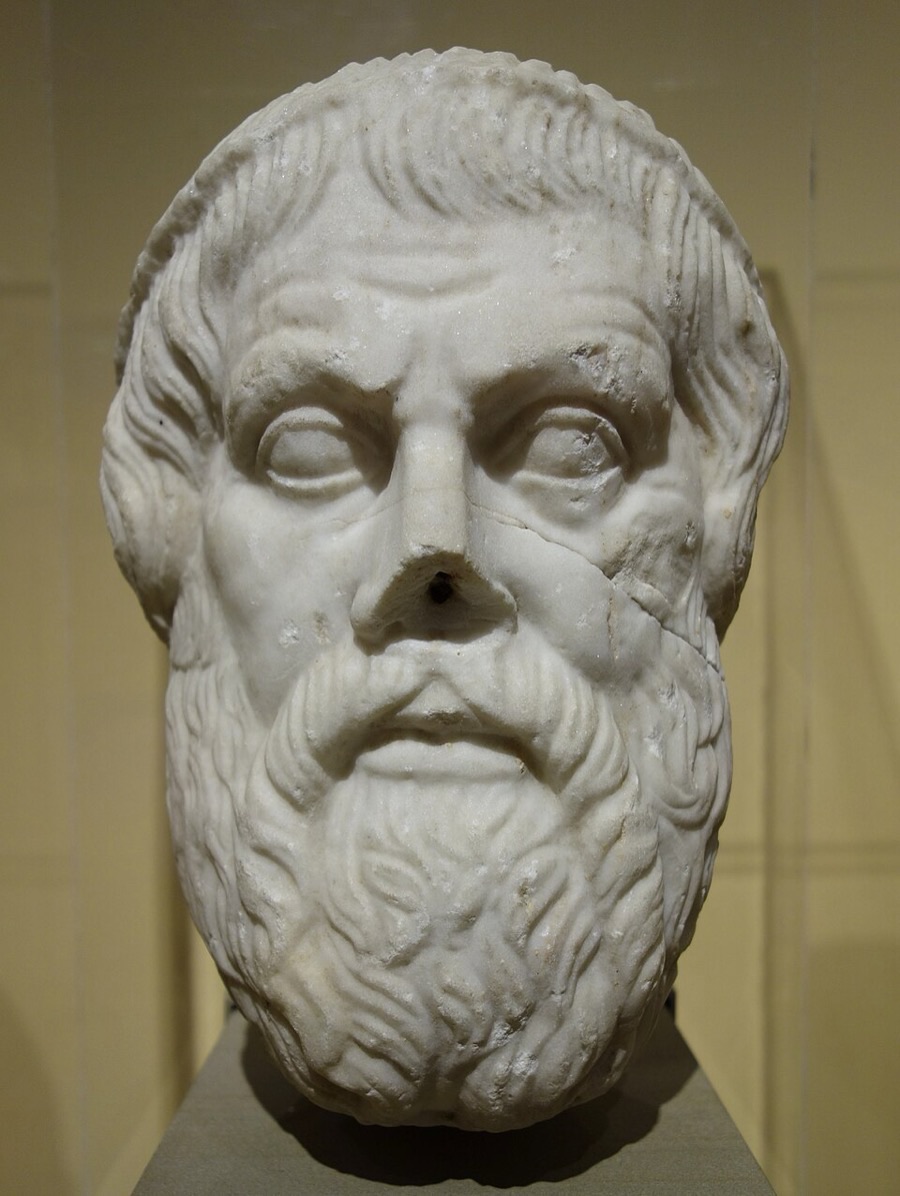
Who they were
Sophocles (c. 497–406 BC) was an Athenian tragedian. By the records he won about twenty victories at the City Dionysia and, per tradition, never placed last — the most successful competitor of the three great tragedians. The records and tradition also give him a full civic life: treasurer of the league funds, a general alongside Pericles, and, per tradition, a priestly role in the cult of Asclepius. He died in 406 BC, months after Euripides.
What they did
Of some 120 plays, seven survive complete: Antigone, Oedipus the King, Electra, Ajax, Women of Trachis, Philoctetes, and Oedipus at Colonus. Aristotle and the tradition credit him with adding the third actor and with scene painting. He wrote self-contained plays rather than connected trilogies, setting the heroic individual against human limits. Aristotle’s Poetics treats Oedipus the King as the exemplary tragedy — reversal and recognition in one. Oedipus at Colonus was staged posthumously by his grandson in 401 BC.
Legacy
Antigone’s conscience set against the state and Oedipus’s search for truth remain among the most staged and re-read of Greek tragedies.