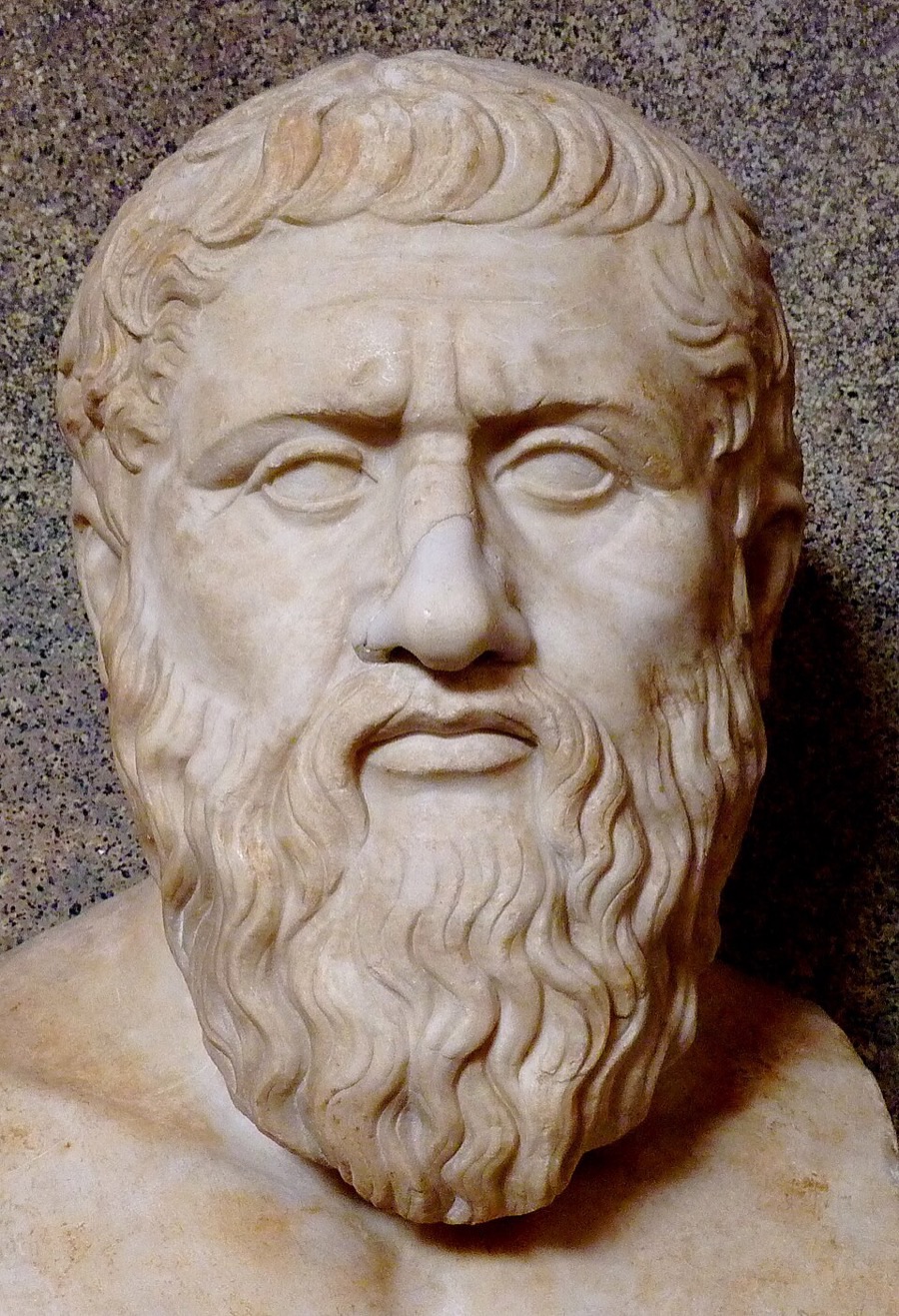
Who they were
Plato (c. 428–348 BC) was an Athenian aristocrat, the student of Socrates and the teacher of Aristotle — the central chain of Greek philosophy. After Socrates’ execution in 399 BC he traveled, including to Italy and Sicily, where his ventures at Syracuse with Dionysius II ended badly. Around 387 BC he founded the Academy in Athens.
What they did
He wrote philosophical dialogues, nearly all of which survive, usually with Socrates as protagonist: the Apology, the Republic — on justice and the ideal city, with its philosopher-kings and the allegory of the cave — the Symposium, the Phaedo, and the Timaeus, among others. As standardly read, the dialogues present his positions: the theory of Forms — unchanging ideal realities behind appearances — together with the immortality of the soul, knowledge as recollection, and rule by philosophers. The Republic’s political vision has been read both as utopia and as a blueprint for authoritarianism, a controversy that remains live.
Legacy
Whitehead remarked, in essence, that European philosophy is a series of footnotes to Plato — a measure of his standing. The Academy ran for centuries, and Platonism shaped both Christian and Islamic thought. The dialogues remain literature as much as philosophy.