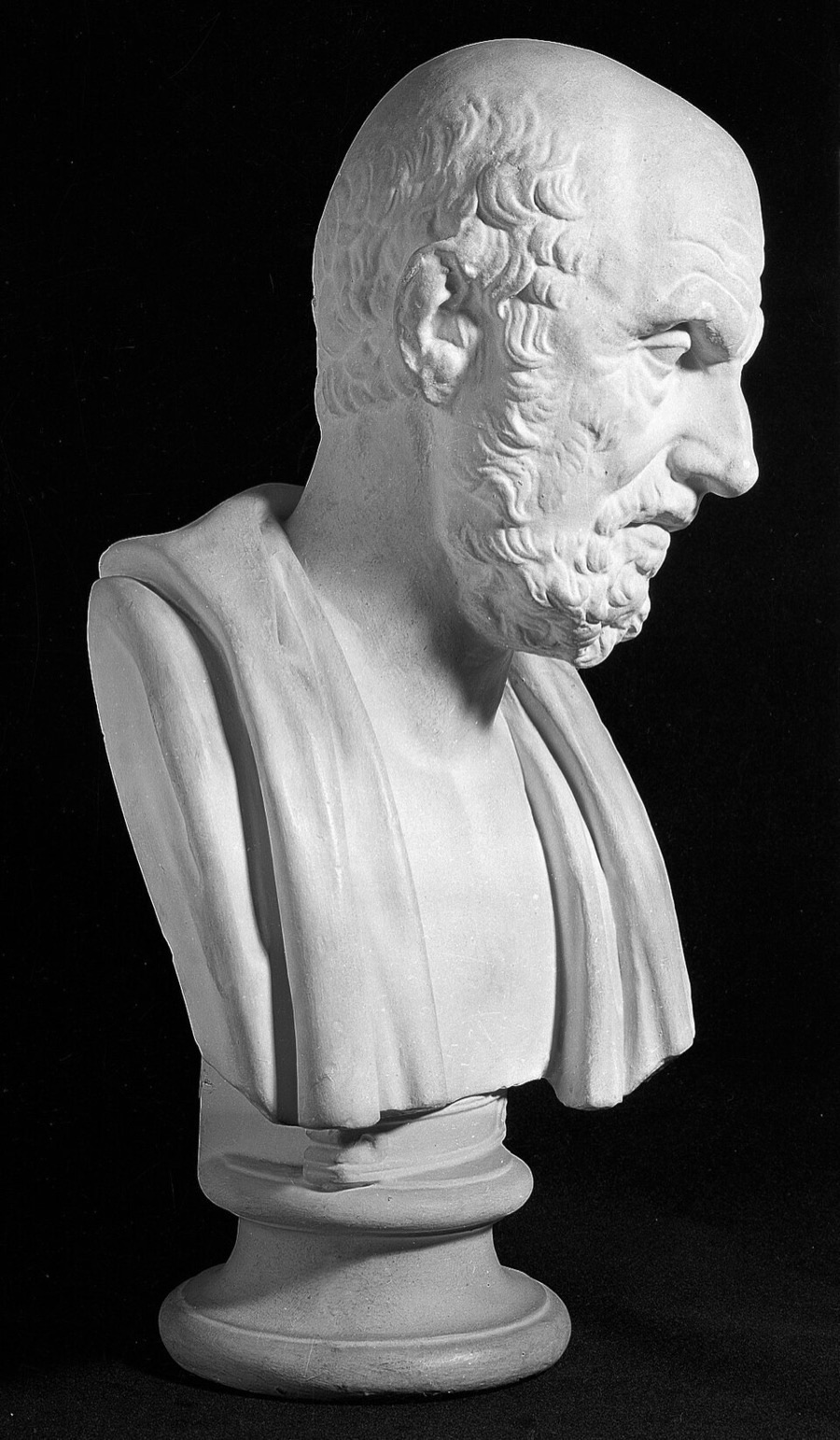
Who they were
Hippocrates lived c. 460–c. 370 BC and practiced medicine on the island of Kos. Almost nothing about his life is certain. The roughly 60 works of the Hippocratic Corpus were written by many hands over decades, and which of them — if any — are his own is unknown.
What they did
The corpus’s core move was to treat disease as having natural causes rather than divine ones: the treatise On the Sacred Disease argues, emblematically, that epilepsy is no more sacred than any other illness. Its authors practiced careful clinical observation and prognosis, and they built the theory of the four humors — a doctrine that dominated medicine for two millennia, influential though wrong. The Hippocratic Oath, the famous ethical pledge, commits the physician to confidentiality and, in spirit, to doing no harm — though the exact do-no-harm phrase comes from elsewhere in the corpus — and it was probably not written by Hippocrates himself.
Legacy
Hippocrates became the emblem of rational, ethical medicine, and modern medical oaths descend in spirit from the one bearing his name. The tale that he taught beneath a plane tree on Kos is legend rather than history.