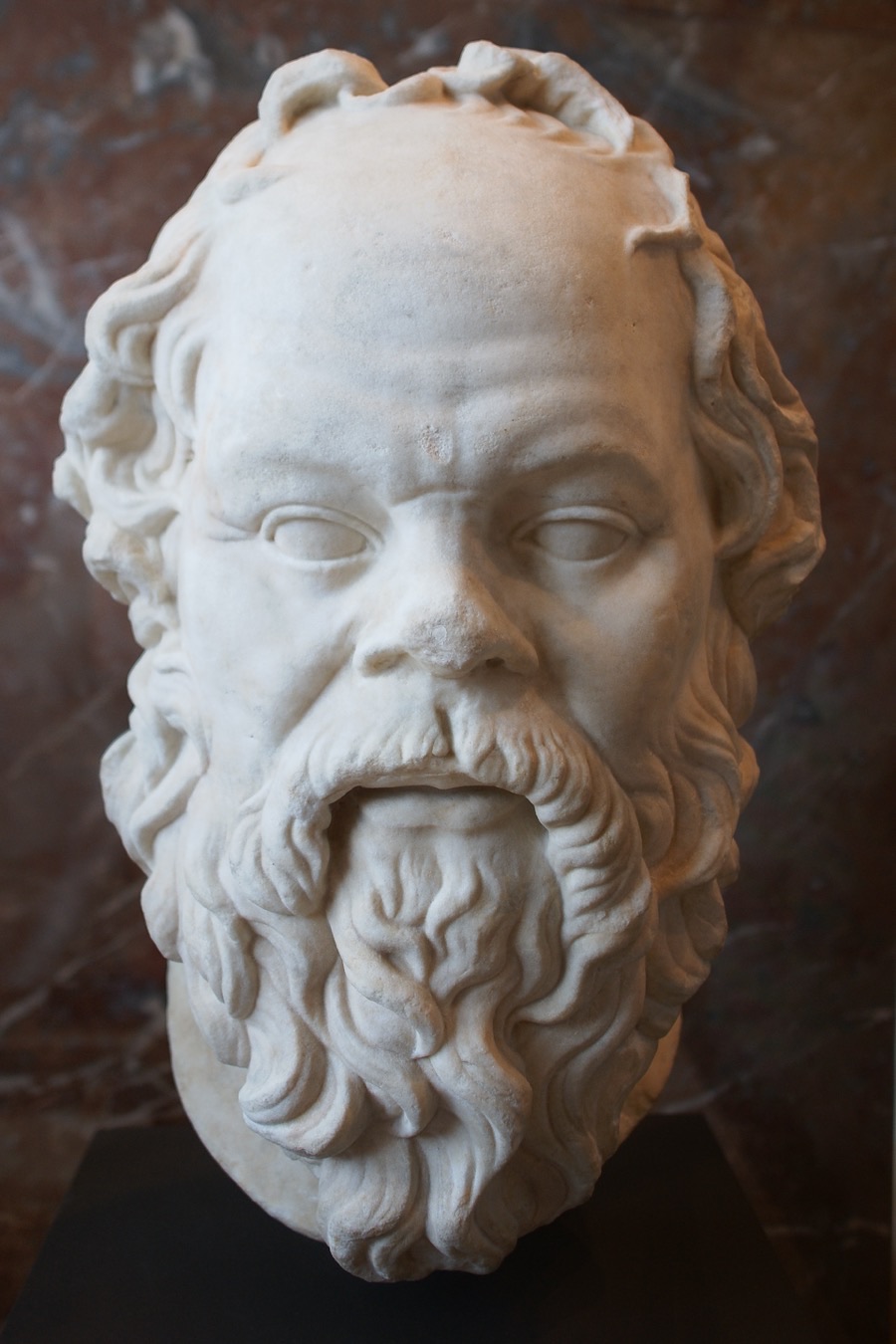
Who they were
Socrates lived c. 470–399 BC in Athens and left no writings; he is known through Plato and Xenophon, along with Aristophanes’ caricature. Separating the man from Plato’s character — the so-called Socratic problem — is impossible in detail. He served as a hoplite at Potidaea and Delium, and he defied illegal orders both under the democracy and under the Thirty Tyrants, refusing, as reported, to take part in the arrest of Leon of Salamis.
What they did
His method was the elenchus: relentless public questioning that exposed the ignorance behind confident answers about virtue, justice, and piety, while he professed ignorance himself — the Delphic oracle, as the story is told, had declared that no one was wiser than Socrates. In Plato’s Apology he holds that a life left unexamined is not worth living, and by the standard assessment he turned philosophy from the study of nature to ethics: the question of how one should live. In 399 BC he was charged with impiety and with corrupting the young — in the standard reading a trial with a political undercurrent, since post-war Athens remembered his association with Critias and Alcibiades. Convicted by a narrow margin, he was condemned to drink hemlock; he refused escape, as told in the Crito, and in Plato’s account in the Phaedo he died discussing philosophy.
Legacy
Socrates became the archetype of the philosopher. Virtually every later school of Greek philosophy claimed descent from him.