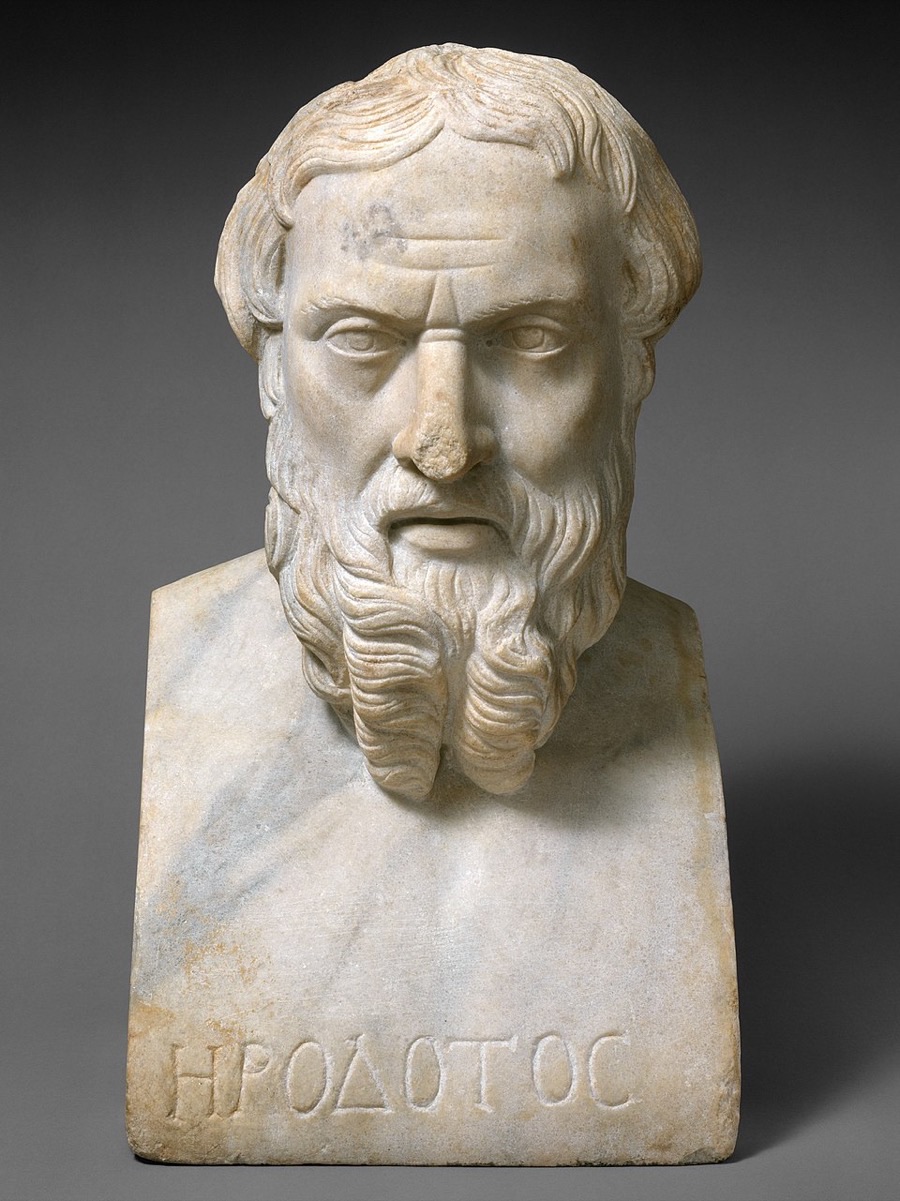
Who they were
Herodotus was born c. 484 BC at Halicarnassus, then under Persian rule, in modern Turkey. By his own account he traveled widely — to Egypt, the Levant, and the Black Sea — though how far he actually went is debated. He later lived in Athens, joined the colony of Thurii in Italy, and died c. 425 BC.
What they did
His Histories is an investigation — a historia — of the Greco-Persian Wars and everything connected to them: geography, customs, and the marvels of Egypt, Persia, and Scythia. He gathered accounts wherever he went, often reporting several versions of a story and sometimes flagging his own disbelief — a real if uneven critical stance. Cicero later called him the father of history; for his tall tales, critics ancient and modern also dubbed him the father of lies. He was notably curious about, and often admiring of, non-Greeks: the work is as much about Persia and Egypt as about Greece.
Legacy
Modern archaeology and Persian records have vindicated some of his details and refuted others. The Histories nonetheless stands as the founding work of history-writing and of ethnography in the Western tradition.