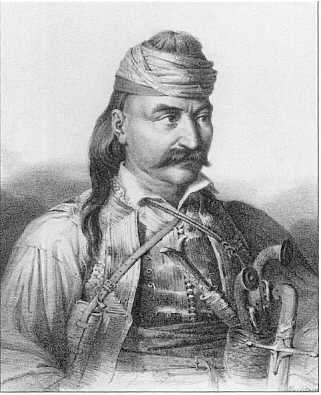
Who they were
Kolokotronis was born in 1770 into a famous klepht family of the Peloponnese. He fought young as an outlaw, then served as an officer in Russian and later British service in the Ionian Islands before 1821. He is generally regarded as the preeminent military leader of the Greek War of Independence.
What they did
From the outbreak of the war he organized the Peloponnesian irregulars, and in 1821 he besieged and took Tripolitsa. His masterpiece came at Dervenakia in 1822, where he destroyed Dramali’s army in the passes. Against Ibrahim Pasha’s invasion he commanded the resistance with guerrilla warfare. The revolution’s internal strife cut both ways for him: imprisoned by rival factions during the civil wars in 1825, he was released when Ibrahim’s threat made his leadership necessary. Under King Otto’s regency he was sentenced to death for treason in a political trial in 1834 — the judges Polyzoidis and Tertsetis famously refused to sign — and was pardoned in 1835.
Legacy
His dictated Memoirs are a classic source and the voice of the revolution. As the Old Man of the Morea he became the national image of the independence fighter — commemorated in equestrian statues, pictured on the old 5,000-drachma note, and passed down in school-book memory.