Overview
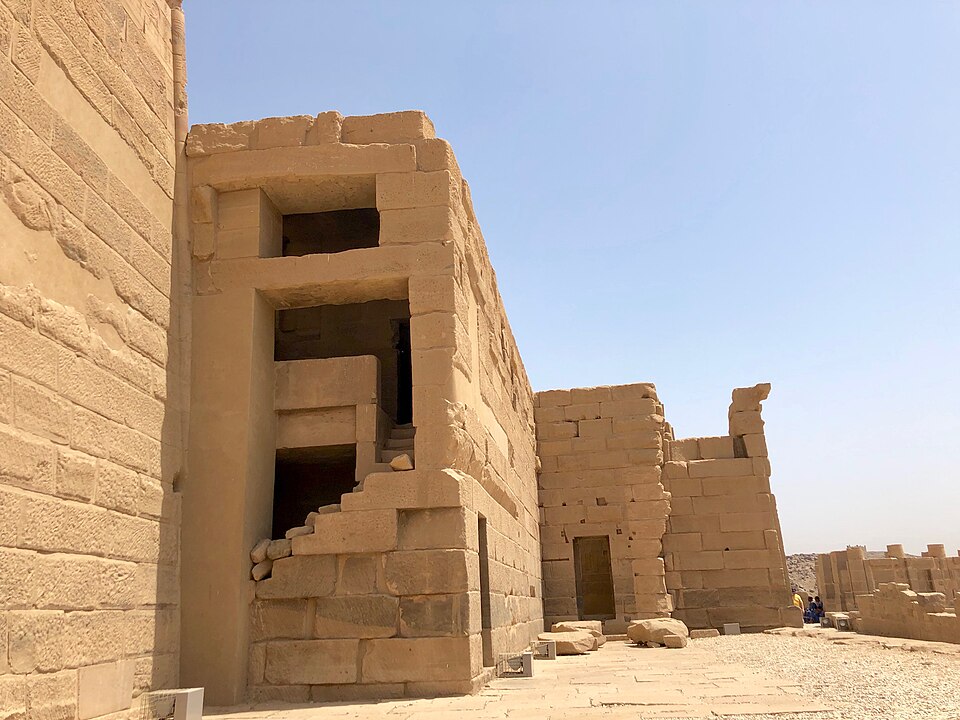
Philae was an island temple complex of the goddess Isis in the Nile near Aswan. Its main construction runs from Nectanebo I in the 4th century BC through the Ptolemaic dynasty and into the Roman era of the 1st century AD, though some work continued later.
Description
The heart of the complex is the great Temple of Isis, built chiefly under Ptolemy II. In the 1st century AD the Roman era added Trajan’s Kiosk, one of the island’s best-known monuments.
History and legacy
Philae was the last stronghold of the old Egyptian religion. The final dated hieroglyphic inscription anywhere was carved here in AD 394, and worship continued until the temple was closed under Justinian in the 6th century AD. After the first Aswan dam left the island partly flooded for much of each year, the complex was dismantled and rebuilt on the nearby island of Agilkia between 1972 and 1980 in the UNESCO Nubian campaign, and in 1979 it was inscribed among the Nubian Monuments on the World Heritage list.