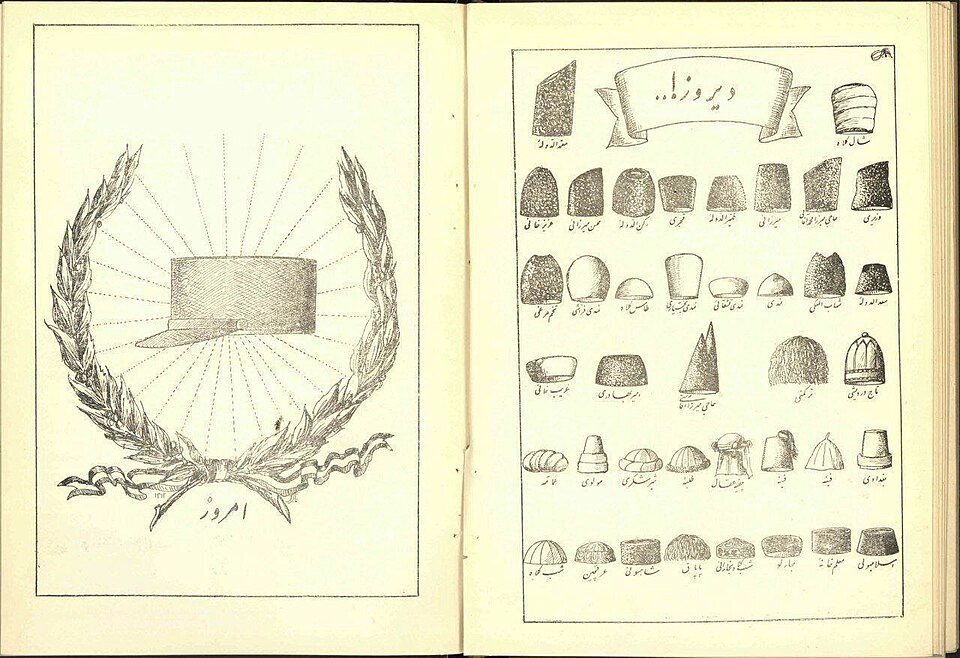
Overview
The law of December 1928 required men outside a licensed clerical exemption to wear Western-style jacket and trousers with this cap. The hat is stiff, brimless at the sides and peaked at the front — close to a French kepi, and deliberately not a turban and not a fez. Its point was uniformity: Iran’s provinces, tribes, trades and religious classes had each been legible by headgear, and the state’s aim was to make a man’s origin unreadable at a glance and his nationality readable instead.
How it is worn
It is worn squarely, with the peak forward, over short hair, and it will not stay on during a prostration in prayer — which was one of the objections raised at the time, since the brim prevents the forehead from touching the ground. That collision was not incidental. The exemption system that accompanied the law made clerical dress a licensed status rather than a default, and the hat was the visible test of who held the licence.
History
In 1935 the Pahlavi hat was replaced by the European brimmed hat, and enforcement of that change produced the Goharshad Mosque protest in Mashhad and its violent suppression. The hats themselves survive in photographs of the period, on clerks, soldiers and schoolboys, and mark those photographs’ date within a few years — which is the practical use a costume historian gets from a garment that existed for less than a decade.