Overview
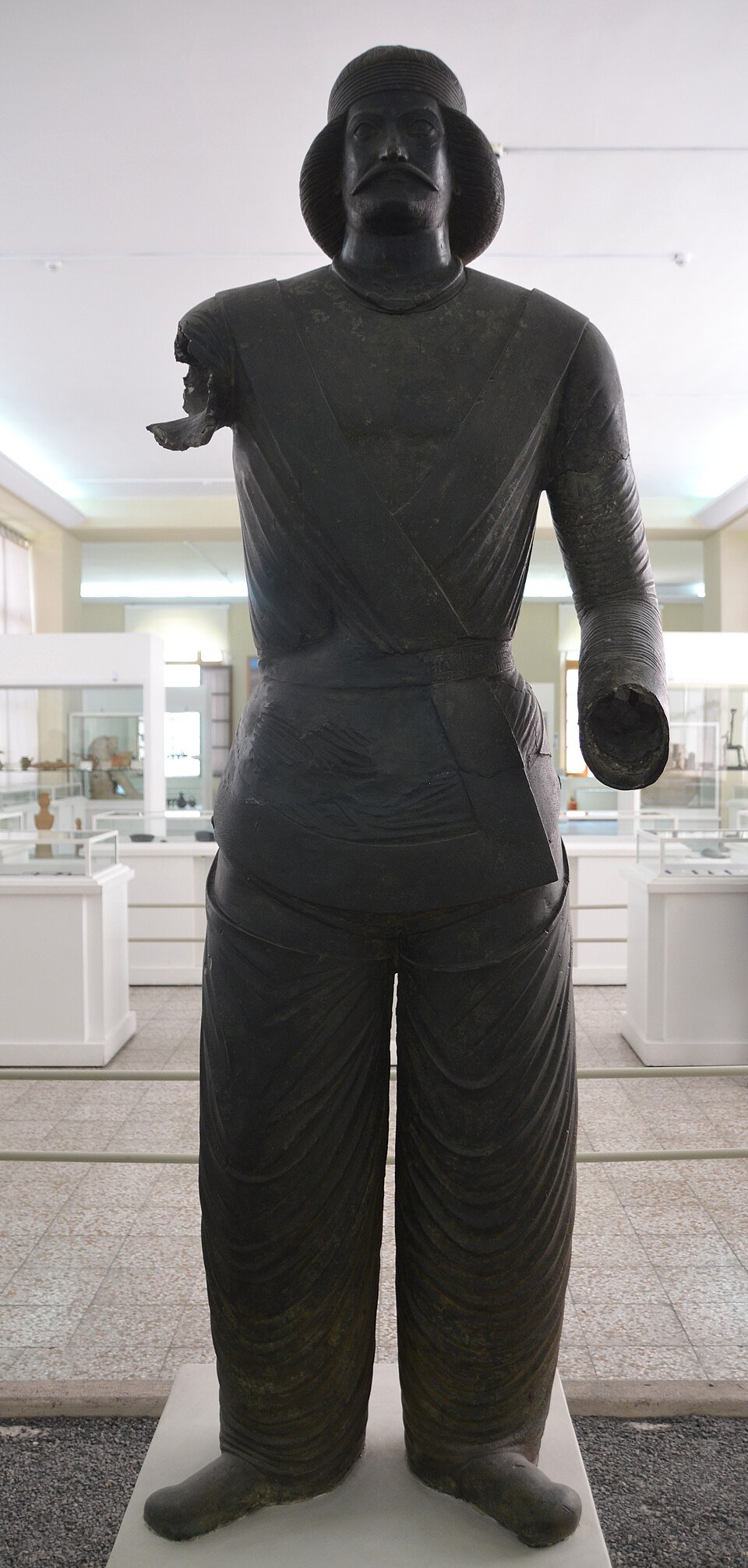
The characteristic Parthian outfit is a hip-length tunic with a rounded or V-neck, cinched at the waist, over full trousers gathered into folds down the leg, finished with a coat or cloak and soft boots. Statues such as the bronze prince from Shami show the tunic and trousers covered in decorative bands.
How it is worn
The tunic is belted at the waist and the ample trousers fall in soft vertical folds to the ankle, the whole made to be worn on horseback with a coat slung over the shoulders. Nobles wore fine patterned cloth and jewelled belts; the dress reads at once as elite and equestrian.
History
Parthian dress carried the ancient Iranian riding tradition through the centuries of Arsacid rule and influenced the costume of Rome’s eastern neighbours and of later Iran. Its layered, patterned, trousered look is the ancestor of much of the coat-and-trouser dress of the medieval Near East.