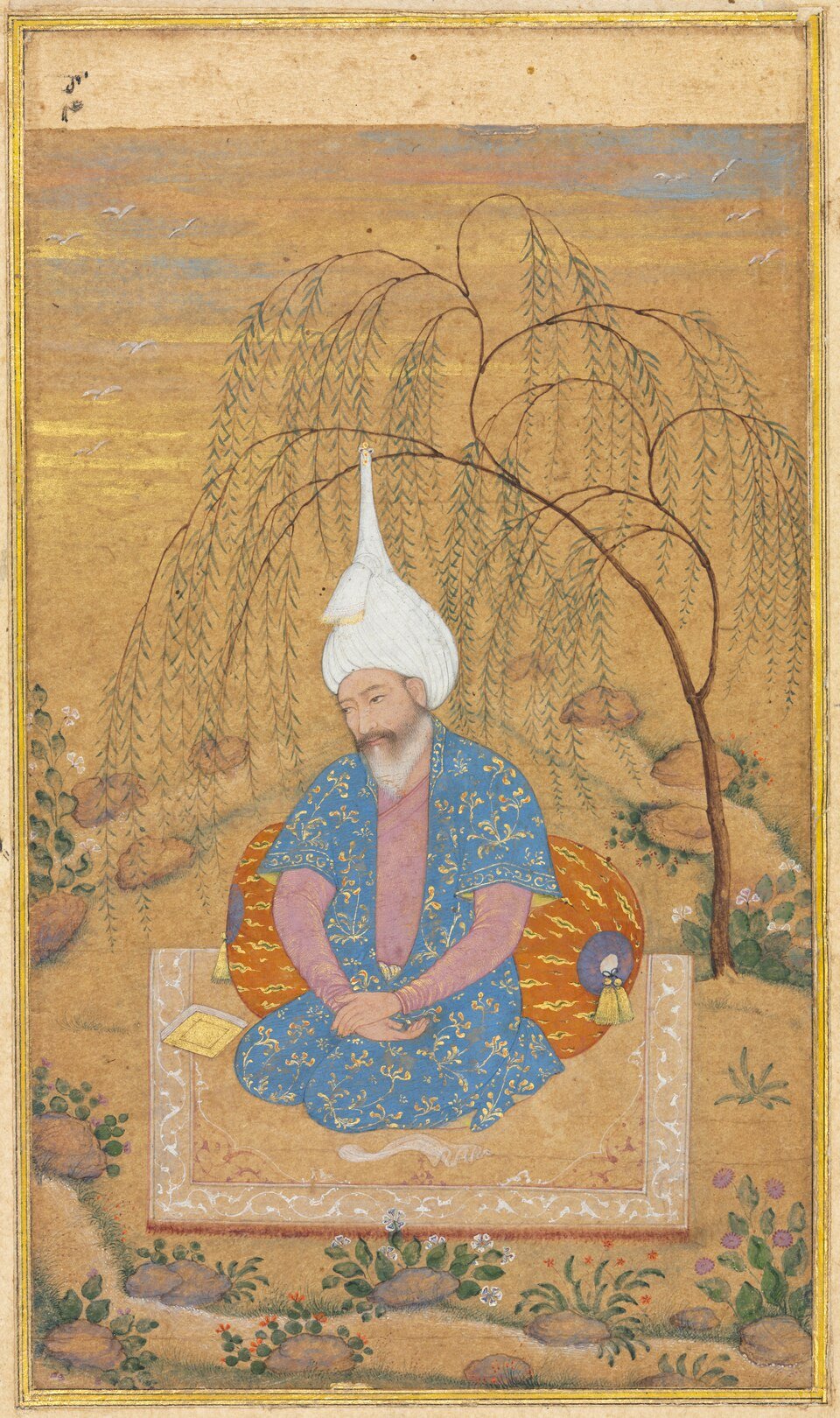
Overview
A dulband is a long strip of fine cloth wound in careful turns around a cap or a shaped core, sitting high on the head. The Safavid form was built around the taj-i Haydari, a tall red cap with twelve gores standing up in the centre, swathed in white cloth.
How it is worn
It is wrapped turn over turn around the head, the folds set with care as a mark of taste and rank, and worn with the kaftan and sash of court dress. The colour of the cap, the fineness of the winding, and any jewelled aigrette all signalled the wearer’s standing.
History
The Persian turban was worn from antiquity, but its Safavid form carried political meaning: the twelve folds of the taj honoured the Twelve Imams of Shi’a Islam and marked the Qizilbash followers of the Safavid order. Later Persian turbans grew rounder and, among the clergy, survive to this day.