What happened
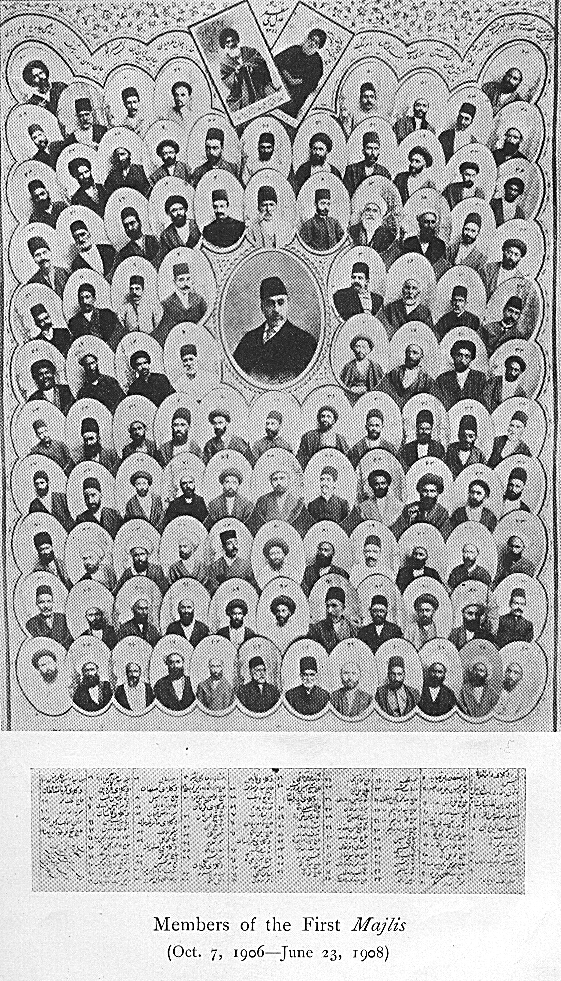
Between 1905 and 1911, a broad movement of merchants, clergy, and intellectuals forced Iran’s first constitution and parliament from the Qajar monarchy. Mozaffar ad-Din Shah signed the constitution, and the first Majlis met in 1906. The new shah, Mohammad Ali, backed by the Russian-officered Cossack Brigade, bombarded the Majlis in 1908; in the civil war that followed, Tabriz withstood a siege, and constitutionalist forces from Rasht together with the Bakhtiari tribes took Tehran in 1909 and deposed him. In 1911, Russian ultimatums forced the dismissal of Morgan Shuster, the American whom the second Majlis had hired to reform Iran’s finances, and Russian troops crushed the remaining resistance — the revolution’s effective end.
Background
The trigger came in 1905 with protests over arbitrary punishments and economic distress, expressed in bazaar closures and mass sanctuary-taking — first at the Shah Abdol-Azim shrine in December 1905, then, in July–August 1906, on the grounds of the British legation. The constitution, with its 1907 supplement, established limits on royal power, a parliament, and civil rights, alongside a clause of clerical review over legislation — a compromise between constitutionalists and clergy.
Consequences
The revolution ranks among the first constitutional revolutions in Asia. Though crushed in 1911, it left the parliament standing as an institution, and its vocabulary — constitution, national sovereignty, the rule of law — framed Iranian politics for the century that followed.