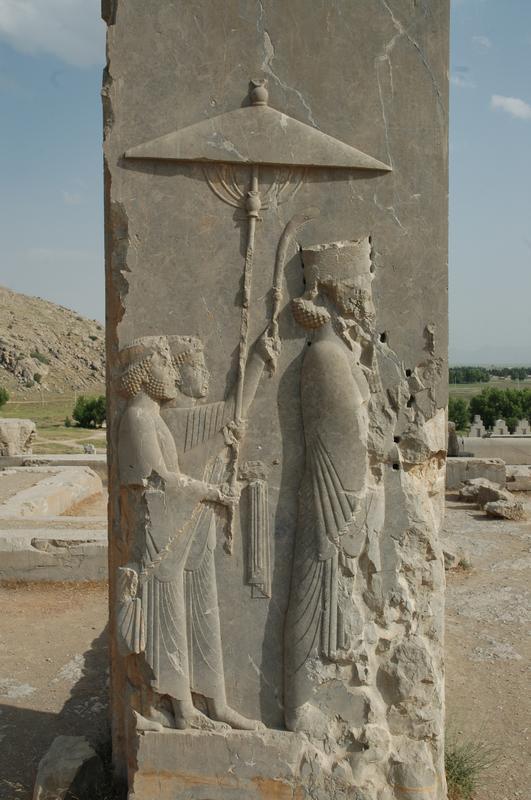
Who they were
Xerxes I was the son of Darius I and Atossa, daughter of Cyrus, and came to the throne in 486 BC. Early in his reign he crushed revolts in Egypt and Babylon. Later sources say his measures in Babylon included harsh treatment of its temples, but those sources are hostile and must be read with caution.
What they did
In 480–479 BC he led the great invasion of Greece in person, bridging the Hellespont with boat-bridges and cutting a ship canal at Mount Athos — well-attested feats of engineering. He won at Thermopylae and burned Athens; from the Persian point of view, the campaign’s early phase was a success. The naval defeat at Salamis (480 BC) and the land defeat at Plataea (479 BC) then ended the invasion; Xerxes himself had returned to Asia after Salamis, leaving Mardonius in command. After the war he concentrated on building at Persepolis, including the Gate of All Nations and the Hall of a Hundred Columns.
Legacy
He was assassinated in a palace conspiracy in 465 BC, and his son Artaxerxes I succeeded him. Greek tradition painted him as the archetypal arrogant despot — a hostile caricature that modern historians read critically. In Persian records he appears as a conventional great king.