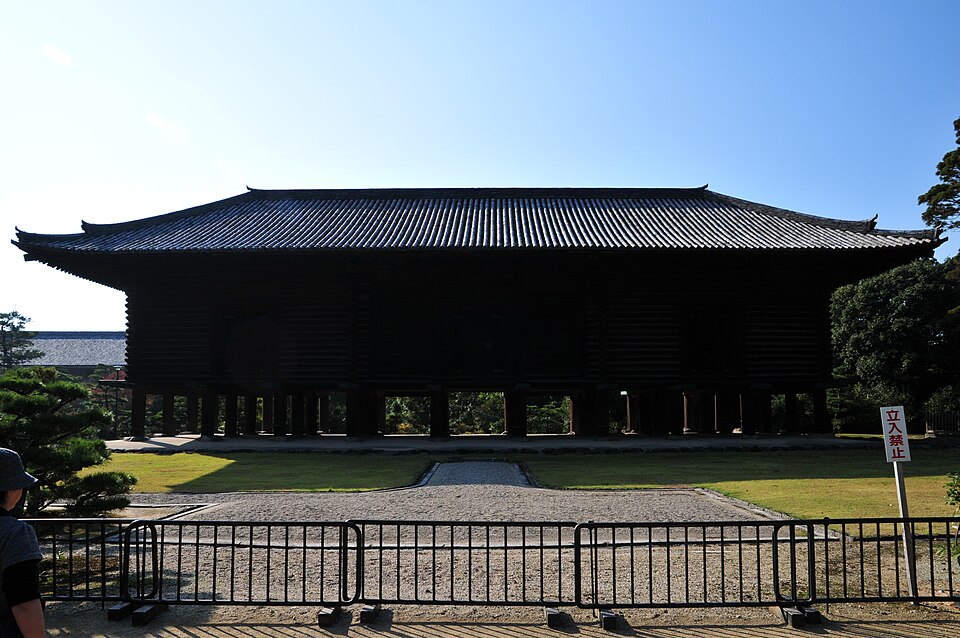
Overview
Heijo-kyo (Nara) was laid out on the model of Tang Chang’an, and the ritsuryo state was at its most Chinese. Japan’s oldest chronicles were compiled here — the Kojiki (712) and Nihon Shoki (720) — along with the Man’yoshu poetry anthology (mid-8th century, some 4,500 poems).
Key developments
A devastating smallpox epidemic (735–737) killed a large share of the population — estimates run as high as a quarter or even a third. Emperor Shomu answered the crisis with state Buddhism: provincial temples across the country and the Great Buddha at Tōdai-ji, consecrated in 752. The Chinese master Ganjin (Jianzhen) arrived in 754 to found the precepts tradition.
End and transition
The court left Nara, moving via Nagaoka (784) to Heian-kyo in 794.