Overview
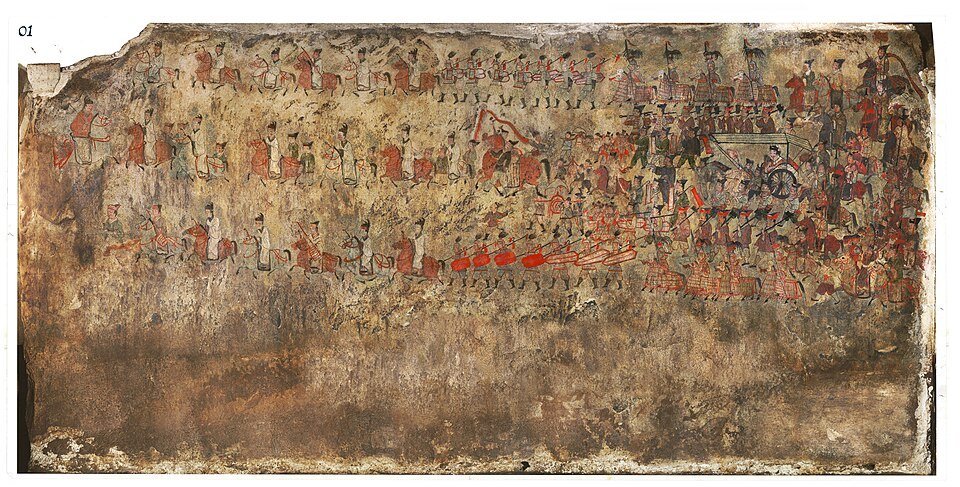
This is the period in which Korean dress becomes visible and, in structure, recognisably itself. The Goguryeo tomb murals show what people wore, and what they wore is the two-piece arrangement — jacket above, trousers or skirt below — that Korean clothing has kept ever since.
Key garments and style
Everyone wears the jeogori, a hip-length jacket crossing at the front and tied, over baji trousers for men or a chima skirt for women, with a po coat over the top for warmth or formality. The proportions are quite unlike later hanbok: the jacket is long, reaching the hip, and belted, so the silhouette is straight rather than high-waisted.
The murals add what no text would. Muyongchong and other Goguryeo tombs show garments patterned all over with dots and roundels, sleeve and hem bands in contrasting colour, and men in trousers gathered at the ankle — riding dress, consistent with a northern origin. Rank shows in colour, in the width of the bands and in headgear.
The three kingdoms differed. Silla and Baekje are known above all for goldwork, and the Silla gold crowns, with their tree and antler uprights hung with comma-shaped jade, are among the most spectacular objects of ancient East Asia.
Transition
Unified Silla adopted Tang official dress for court use, layering a Chinese formal wardrobe over the native two-piece rather than replacing it.