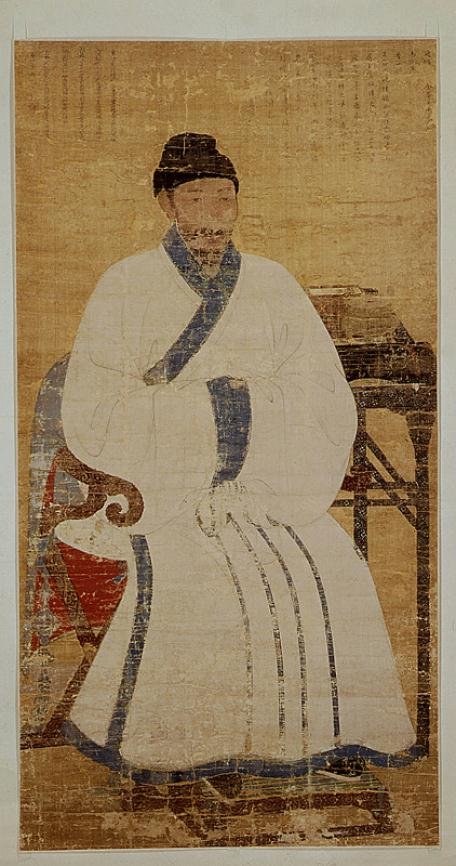
Overview
Goryeo dress is best understood as two exchanges. For most of the dynasty, court costume followed Chinese models while Buddhism shaped a refined aristocratic taste; then, after the Mongol wars, the Korean and Mongol courts intermarried and dress moved in both directions at once — Mongol forms into Goryeo, Goryeo forms into the Yuan capital.
Key garments and style
The materials were a Goryeo strength. Fine ramie, light and crisp in a humid summer, was woven to a quality that made it an export prized in China, alongside silk and hemp; ramie remains the characteristic Korean summer cloth.
The Mongol century left the deeper mark. Court dress and hairstyles took up Yuan forms, and the change that matters most for later Korean dress begins here: the women’s jeogori starts to shorten and its tie to sit higher, a drift that continues for four hundred years until the Joseon jacket is barely longer than the bust. Traffic ran the other way too — Korean dress and food were fashionable at the Yuan court, recorded there as the Goryeo style.
Buddhist patronage supplied the period’s finest surviving textiles, in temple banners and the gold-lettered sutra manuscripts, rather than in clothing itself.
Transition
Joseon’s Confucian order took the shortening jeogori and the full skirt and fixed them into the proportions now recognised as classic hanbok.