Overview
The Korean Empire dressed to make a claim. Proclaiming an empire in 1897 meant asserting equality with the powers that were circling the peninsula, and Western uniform was the international language for saying so — while for almost everyone outside officialdom, clothing did not change at all.
Key garments and style
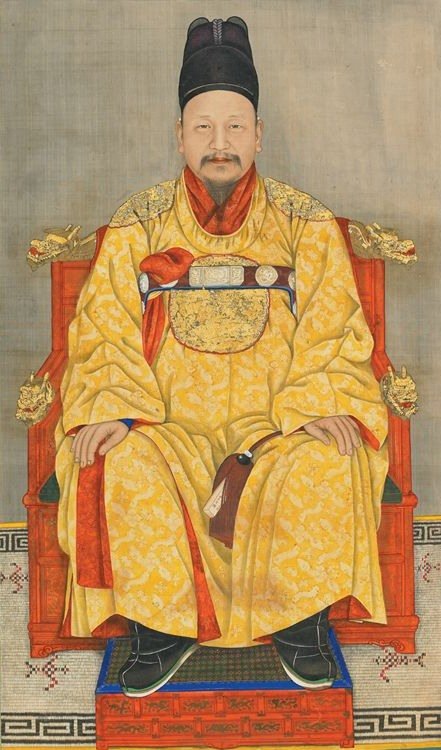
The emperor and his officials adopted Western court and military uniform: braided tunics, plumed helmets, sashes and orders, and Gojong was photographed in both this and full Korean regalia depending on the audience. Officials were placed in Western-style civil uniform by decree in the 1890s.
The reforms reached the head as well, and there they broke. The 1895 edict cutting the topknot was resisted furiously — the topknot was a Confucian obligation to the body received from one’s parents, so cutting it was not a change of style but a violation, and the order helped provoke armed uprisings.
Everyday dress stayed the white jeogori with baji or chima, hence the old description of Koreans as the white-clad people. Reformers had already simplified official dress in the Gapsin and Gabo reforms by cutting the wide sleeves and layers of the Joseon coat, which was as much about efficiency as appearance.
Transition
After annexation in 1910 Western clothing spread further through schools, offices and cities, and the reformed hanbok of the colonial decades grew out of the same practical impulse these reforms began.