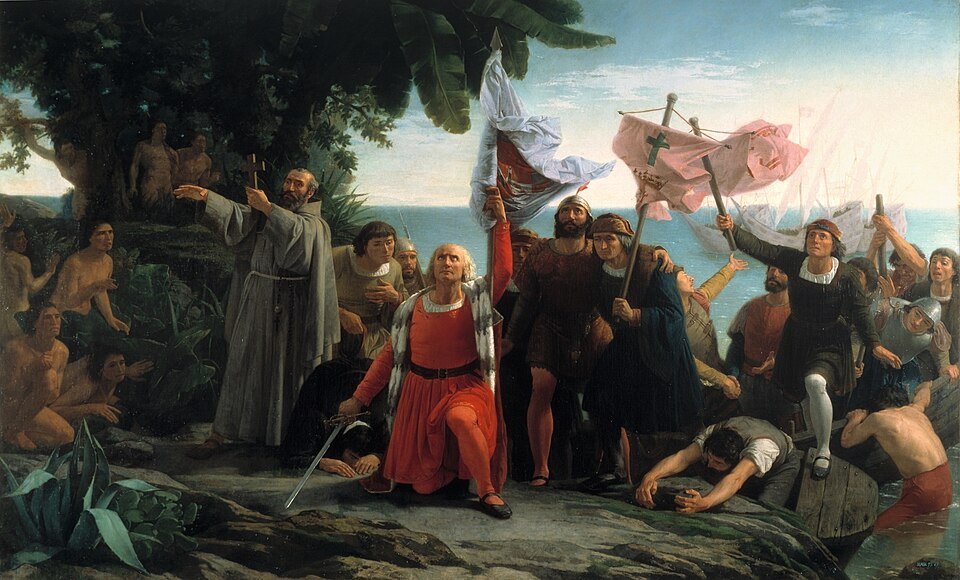
Overview
Spanish expeditions first seized the Caribbean and then the mainland: Cortes overthrew the Aztecs between 1519 and 1521, and later conquistadors subdued much of Mesoamerica and probed north into what is now the U.S. Southwest and Southeast.
Key developments
The Columbian Exchange moved crops, animals, and people between hemispheres and transformed diets worldwide, but Old World epidemics — smallpox above all — killed a large share of Indigenous Americans in a demographic catastrophe. Spain built New Spain on the ruins of the Aztec state, founded Mexico City, and began importing enslaved Africans.
End and transition
By 1600 Spain held a vast American empire, while French and English voyagers were beginning to probe the north Atlantic coasts. The stage was set for rival colonial projects across the continent.